Patients regularly ask for portable recovery gear, leading to this clinical specification review of the Rouge Nano. As an Athletic Therapist and clinical researcher, I evaluate red light therapy devices based on tissue penetration, optical irradiance, and published rehabilitation outcomes. The Rouge Nano is an affordable option for targeted spot treatment.
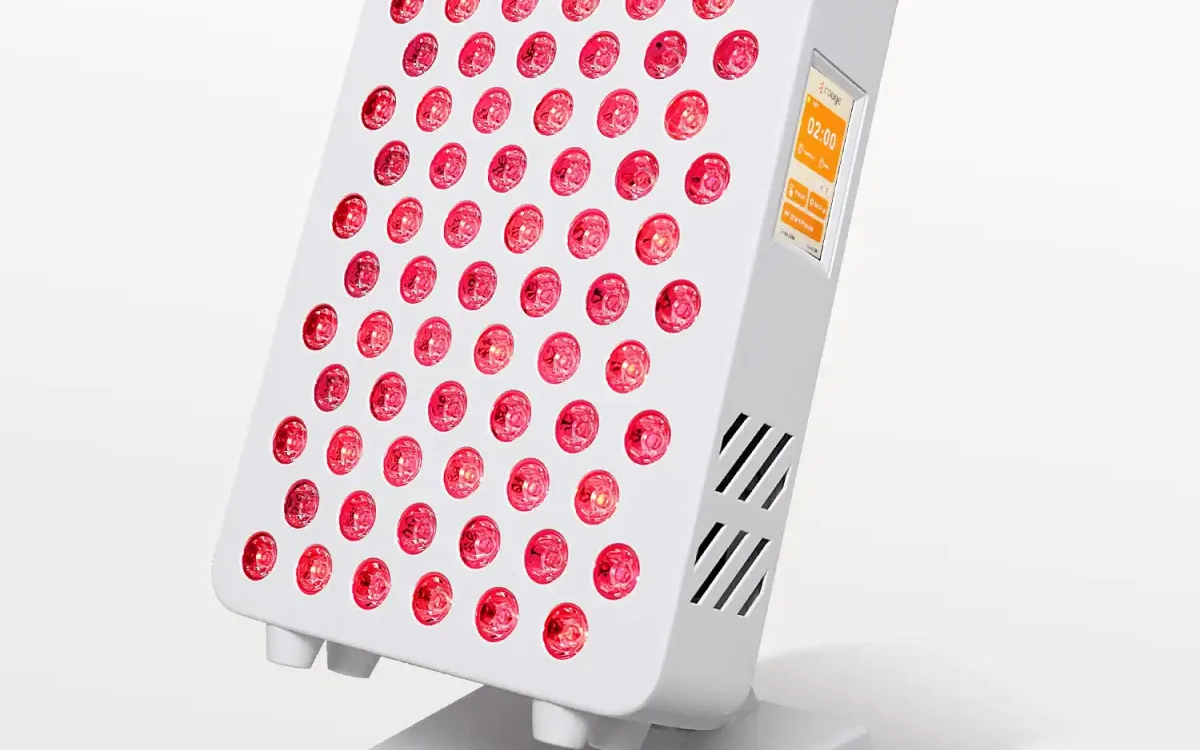
It has one main limitation: it delivers only two wavelengths (660nm red and 850nm near-infrared), compared to the eight wavelengths built into Rouge's larger G4 panels. If you want focused spot treatment on the road, it works well.
Rouge Nano Specifications
Here is how the Rouge Nano is built:
| Feature | Rouge Nano |
|---|---|
| LED Count | 12 LEDs |
| Wavelengths | 2 ONLY (NOT 8): 660nm + 850nm |
| Form Factor | Handheld portable |
| Build | Metal construction |
| Controls | Basic onboard buttons |
| App Control | No |
| Independent Dimming | No |
| Presets | Basic modes |
| Case | Hard-shell travel case included |
| Price (USD) | ~$295 |
The Nano uses only 660nm and 850nm. This design choice keeps the housing compact.
You do not get the eight wavelengths (630, 650, 660, 670nm red and 810, 830, 850, 1060nm NIR) included in Rouge's larger G4 panels. While 660nm and 850nm handle most localized spot treatments well, full-body panels provide broader depth penetration across different tissue layers.
Portable Design: Built for Life On-the-Go
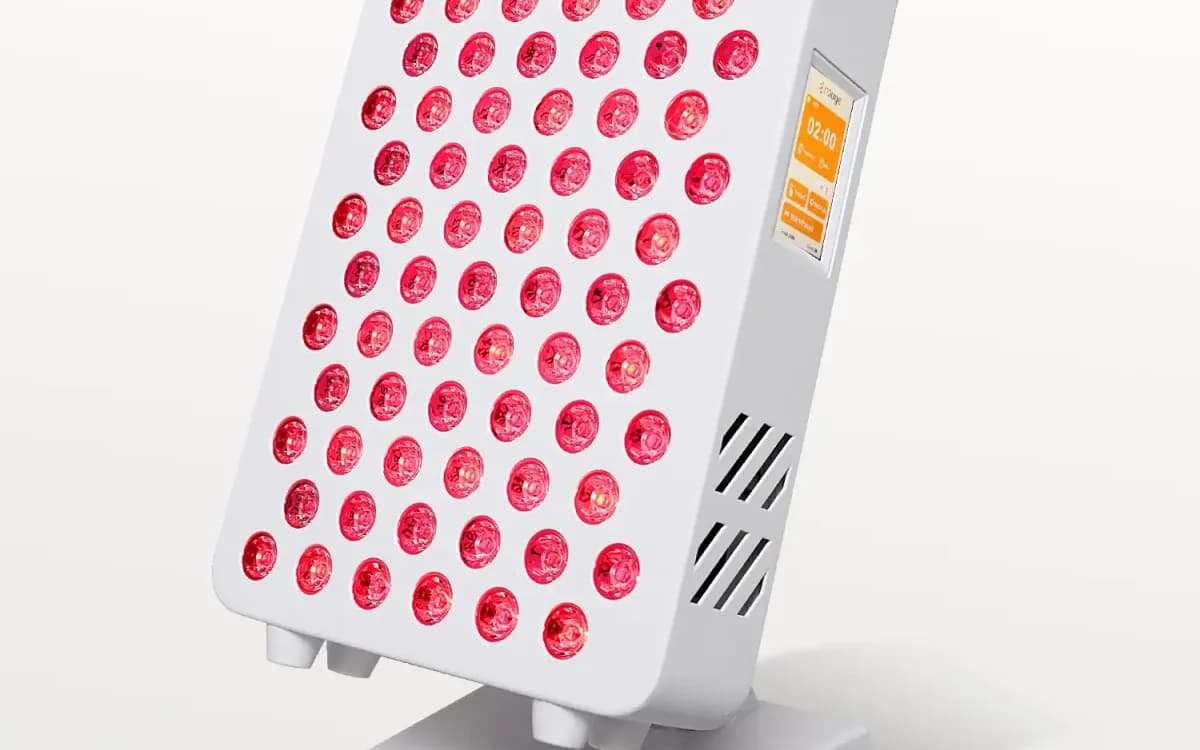
The Rouge Nano focuses on portability. With 12 LEDs in a handheld shell, it fits easily into a gym bag or carry-on luggage. That makes it practical for traveling athletes or quick treatments at an office desk.
What works well:
- Solid metal shell: The housing feels durable and avoids the thin plastic common in budget portables.
- Included hard case: Rouge supplies a protective travel case at no extra cost.
- Simple button operation: No phone pairing required: just turn it on and treat the area.
- Lightweight design: Easy to hold for a 10-minute session without arm fatigue.
- Cordless battery: Rechargeable battery operation eliminates messy cables.
Limitations to consider:
- Small treatment area: 12 LEDs cover only a 3-to-4 inch radius, making it impractical for large muscle groups like quads or lats.
- No app connection: Lacks remote scheduling and custom pulsing controls.
- No preset modes: Operates as a manual unit without preset clinical programs.
- No independent dimming: Red and near-infrared run together without individual intensity controls.
The Nano's portability is its strongest feature. It does not replace a full panel, but it functions well as a supplementary travel tool.
Performance: Targeted Treatment with Clinical Precision
With 12 LEDs and two wavelengths, the Rouge Nano is built specifically for spot treatment rather than full-body coverage.
The combination of 660nm (red light) and 850nm (near-infrared light) handles common localized issues:
- 660nm (Red Light): Absorbed primarily in superficial skin layers and capillaries, stimulating cellular ATP production for skin repair and collagen synthesis.
- 850nm (Near-Infrared Light): Reaches deeper into joint capsules, tendons, and muscle tissue to help calm soreness and joint inflammation.
Best use cases:
- Targeted joint treatment for knees, elbows, wrists, and shoulders.
- Facial spot treatments for blemishes or localized redness.
- Small-area muscle recovery after workouts (such as bicep or forearm strains).
- Travel recovery sessions while away from home.
- Localized therapy for pets.
- Quick desk-side treatments for neck and shoulder stiffness.
Not suitable for:
- Full-body recovery sessions.
- Large back, chest, or leg areas where treatment would take too long.
- Multi-depth protocols that require 8-wavelength coverage.
- Broad facial skincare routines where full coverage is preferred.
Nano vs. Other G4 Panels: The Key Wavelength Distinction
Wavelength selection is the biggest difference across the Rouge lineup.
The Rouge Nano has ONLY 2 wavelengths (660nm + 850nm). All other G4 panels (Tabletop, Pro, Max, Ultimate) include 8 wavelengths:
- Red wavelengths: 630nm, 650nm, 660nm, 670nm
- NIR wavelengths: 810nm, 830nm, 850nm, 1060nm
While the Nano covers the two most researched wavelengths, larger panels deliver a broader spectrum that targets different cellular depths simultaneously.
| Feature | Nano | Tabletop G4 | Pro G4 | Max G4 |
|---|---|---|---|---|
| LEDs | 12 | ~144 | 288 | 576 |
| Wavelengths | 2 ONLY | 8 Full | 8 Full | 8 Full |
| App Control | No | Yes | Yes | Yes |
| Price | ~$295 | ~$645 | ~$1,495 | ~$2,995 |
| Best For | Spot treatment | Face/joints | Half-body | Full-body |
If you are comparing the Nano to other G4 panels, decide whether you need the full 8 wavelengths for systemic therapy or if 2 wavelengths meet your portable needs. For a full breakdown of the lineup, see my Rouge G4 Review.
Rouge Nano vs. FlexBeam vs. Joovv Go: A Clinical Comparison
Here is how the Rouge Nano compares with other portable devices:
| Feature | Rouge Nano | FlexBeam | Joovv Go 2.0 |
|---|---|---|---|
| Type | Handheld panel | Wearable wrap | Handheld panel |
| LEDs | 12 | 9 | 36 (dual row) |
| Wavelengths | 2 (660 + 850nm) | 2 (622 + 814nm) | 2 (660 + 850nm) |
| Power Output | Standard | 110 mW/cm² | 45-50 mW/cm² |
| Treatment Area | Small | Medium (wraps) | Medium |
| Travel Case | Included | Included | Sold separately |
| Warranty | 3 years | 5 years | 2 years |
| Price | ~$295 | ~$549 | ~$499 |
Each device fits a distinct use case:
Choose Rouge Nano if:
- Budget is your main factor (at ~$295, it is the most affordable quality handheld).
- You want the smallest form factor for travel.
- You already own a large panel and need a spot-treatment backup.
- You prefer simple one-button controls without an app.
Choose FlexBeam if:
- You want high irradiance (110 mW/cm²) and deeper penetration.
- You need hands-free wearable convenience on curved joints.
- You prefer a 5-year warranty.
Choose Joovv Go if:
- You want a wider 36-LED handheld beam.
- You are already invested in the Joovv mounting ecosystem.
- You want a tabletop stand for desk use.
From a clinical standpoint, the FlexBeam leads for wearable power, the Joovv Go covers more surface area, and the Rouge Nano provides the best value for portable spot treatments. For more details on the FlexBeam, read my FlexBeam review.
Who the Rouge Nano Is For
Recommended for:
- Travelers: Compact dimensions and the included hard case make it easy to pack.
- First-time buyers: An accessible way to try red light therapy without buying a large panel.
- Existing panel owners: A convenient secondary unit for targeted treatments.
- Desk workers: Discreet for quick neck and wrist relief during work breaks.
- Targeted joint care: Suitable for patellar, elbow, or wrist tendon recovery.
Look elsewhere if:
- You want full-body coverage (consider the Rouge Tabletop, Pro, or Max).
- You need the full 8-wavelength spectrum.
- Your main focus is full-face skincare.
- You want app-based frequency pulsing controls.
Final Verdict: Rouge Nano
The Rouge Nano is a sturdy handheld unit designed for portable spot treatment. With two wavelengths, 12 LEDs, and simple button controls, it handles localized joint and tendon care cleanly without the bulk of a full panel.
At $295, it delivers solid value for travel and targeted recovery. If you need wide body coverage or multi-spectrum light, invest in a larger G4 panel instead.
Related Articles
Reviewed by: Daryl Stubbs, CAT(C), Clinical Nutritionist
Athletic Therapist with 12+ years clinical experience integrating recovery modalities in practice.