In my clinical practice, patients frequently ask about the best red light therapy mask to support skin rejuvenation, manage acne, and speed up cellular recovery. As a Certified Athletic Therapist and Holistic Nutritionist, I evaluate wellness technology using verified irradiance data and clinical wavelength specifications rather than cosmetic marketing claims.

What is the Best Red Light Therapy Mask?
The top red light therapy mask for 2026 is the Omnilux Contour FACE due to its flexible medical-grade silicone build, verified 633nm and 830nm wavelengths, and deep body of clinical literature. For a wireless, mobile alternative, the HigherDOSE Red Light Face Mask is my top portable pick.
Quick Comparison of the Top Red Light Masks
| Mask | Key Wavelengths | Irradiance | Design | Best For |
|---|---|---|---|---|
| Omnilux Contour FACE | 633nm + 830nm | 30 mW/cm² | Flexible Silicone | Best Overall / Clinical Backing |
| HigherDOSE Mask | 630nm + 850nm | 50 mW/cm² | Flexible Silicone | Best Wireless / Portability |
How Photobiomodulation Works on Facial Tissue
Red light therapy works by delivering targeted wavelengths of light (typically 630 to 660nm visible red and 810 to 850nm near-infrared) directly into dermal layers where mitochondria absorb the photons.
This absorption triggers key physiological responses:
- Increased ATP production to help skin cells repair damage and regenerate.
- Stimulated collagen synthesis by activating dermal fibroblasts.
- Reduced inflammatory markers to calm redness, acne, and rosacea.
- Improved microcirculation to supply oxygen and nutrients directly to capillary beds.
The Best Red Light Therapy Masks: Detailed Reviews
1. HigherDOSE Red Light Face Mask
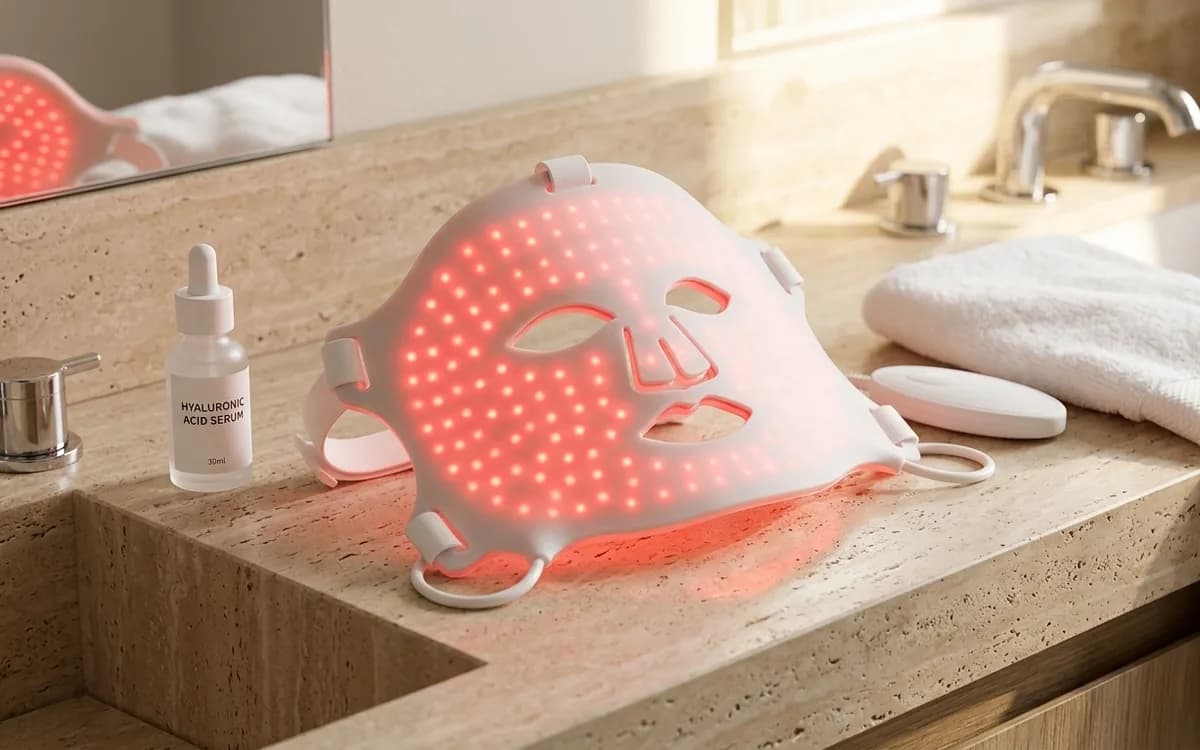
The HigherDOSE mask is a medical-grade silicone mask designed for skin vitality and cellular repair. Its wireless, flexible design contours closely to the face, allowing users to move freely during treatment. It pairs 630nm red and 850nm near-infrared wavelengths to deliver an irradiance of roughly 50 mW/cm² to tissue.
Pros:
- Flexible silicone fits facial contours snugly.
- Cordless design makes daily compliance easier.
- Dual-wavelength output at 630nm and 850nm.
Cons:
- Higher upfront price point.
- No blue light setting for active bacterial acne.
2. Omnilux Contour FACE
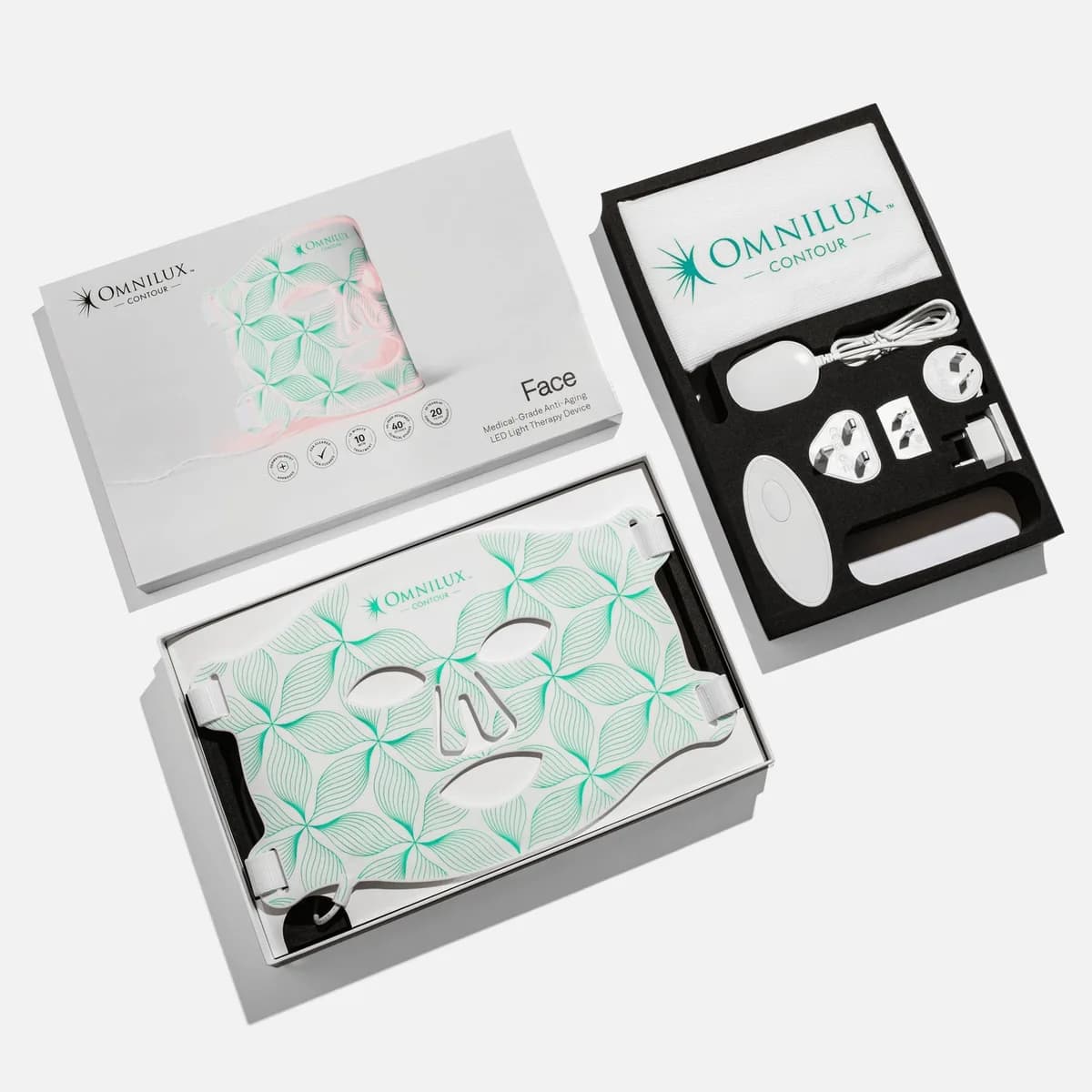
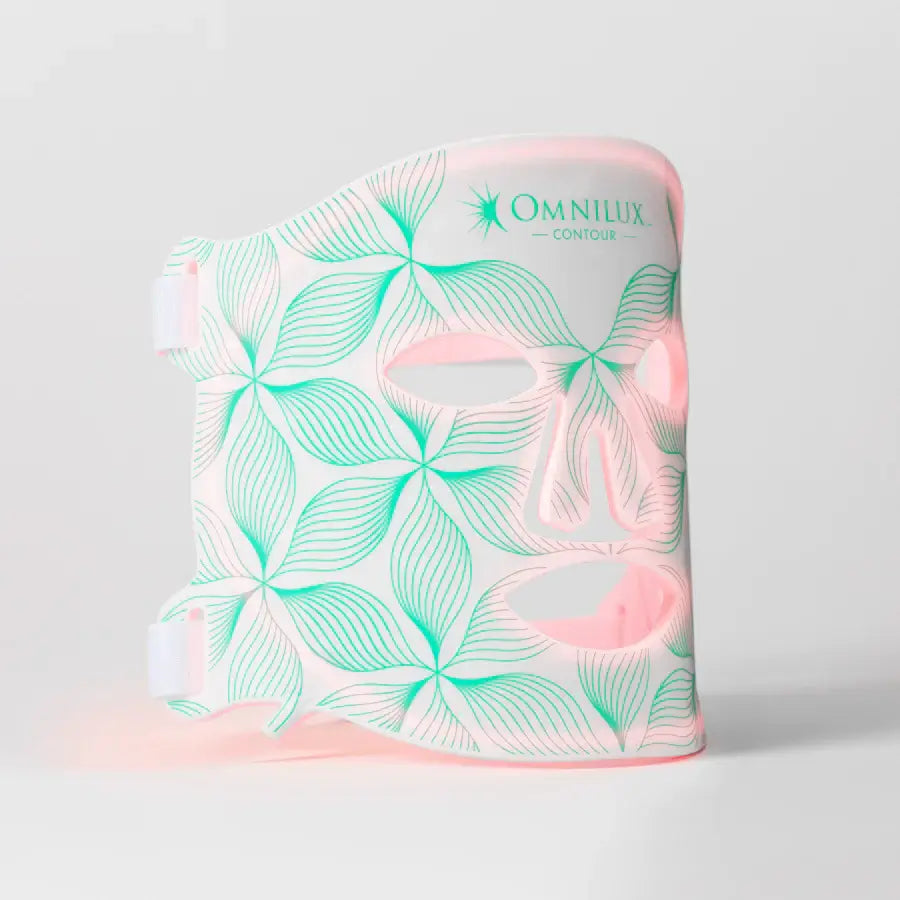
The Omnilux Contour FACE is an FDA-cleared mask supported by extensive peer-reviewed literature. It uses 633nm red and 830nm near-infrared light to target uneven tone, redness, and collagen loss. Published clinical studies demonstrate noticeable improvements in skin elasticity and fine line reduction.
Pros:
- FDA-cleared with extensive clinical validation.
- Lightweight, flexible silicone construction.
- Pre-programmed 10-minute automated sessions.
Cons:
- Requires a corded connection to a rechargeable hand controller.
3. Omnilux MEN
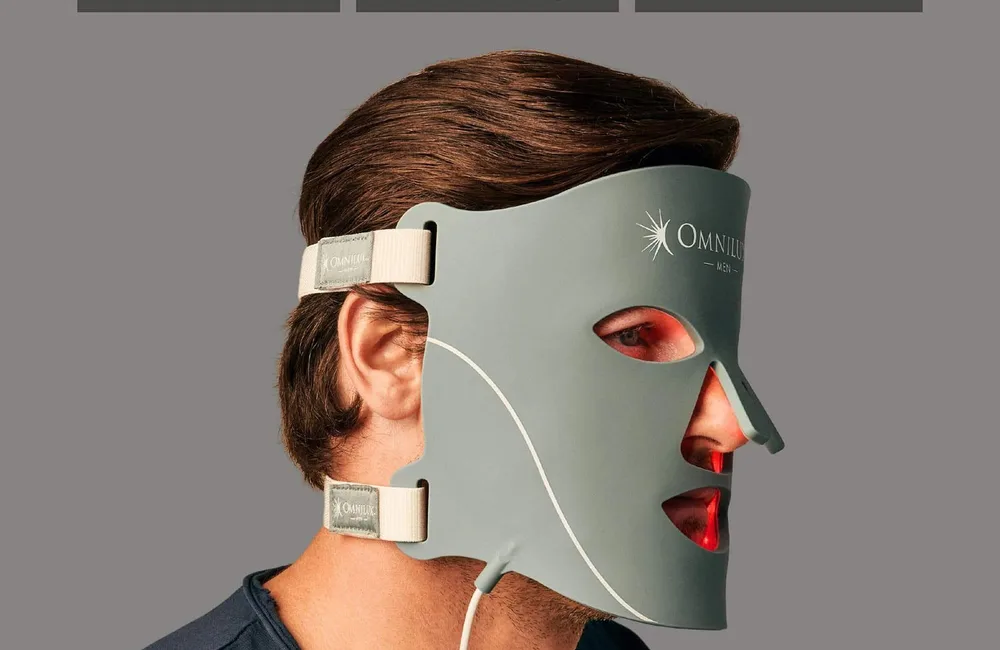
Omnilux MEN uses a 1072nm near-infrared wavelength alongside 633nm red light to penetrate thicker male skin. It targets razor burn, under-eye bags, and deeper facial wrinkles.
Pros:
- Calibrated with 1072nm light to penetrate dense skin layers.
- Helps reduce post-shave irritation and inflammation.
Cons:
- Narrowly targeted design, less versatile for shared household use.
4. Omnilux CLEAR
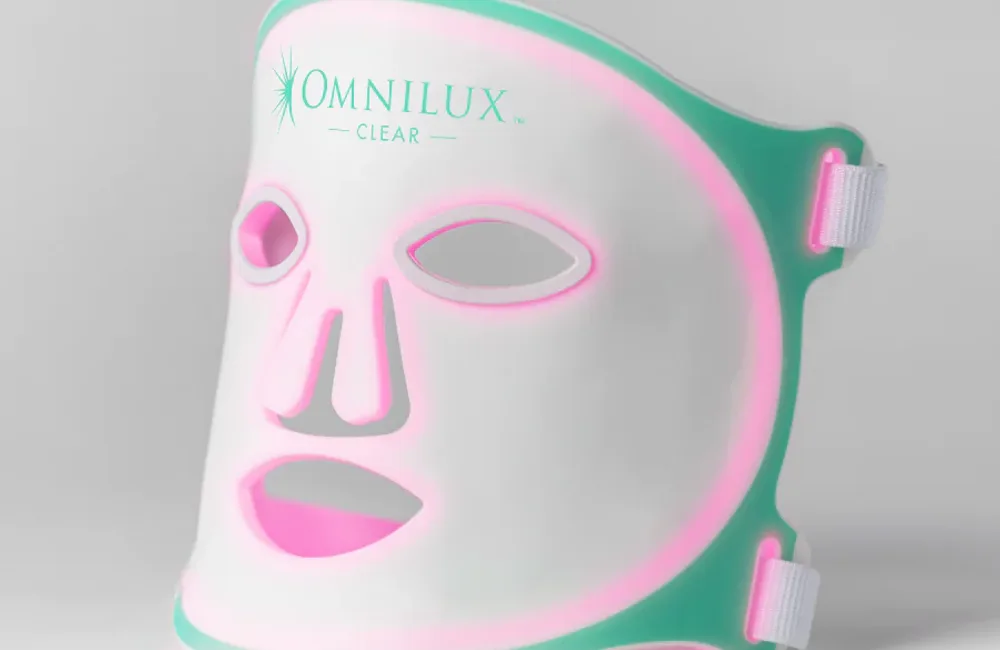
The Omnilux CLEAR is built specifically for acne-prone skin. It combines 415nm blue light to eliminate P. acnes bacteria with 633nm red light to reduce inflammation and redness.
Pros:
- FDA-cleared specifically for mild to moderate acne.
- Dual blue and red wavelengths target both bacteria and swelling.
Cons:
- Optimized for breakouts rather than general anti-aging.
5. CurrentBody Skin LED Light Therapy Mask
This flexible silicone mask delivers high optical output and is clinically tested to improve skin tone and smooth fine lines within four to six weeks of regular use.
Pros:
- Even light distribution across the entire face.
- Soft, pliable silicone molding for comfort.
Cons:
- Battery controller requires frequent recharging.
Omnilux vs Kala: Quick Comparison
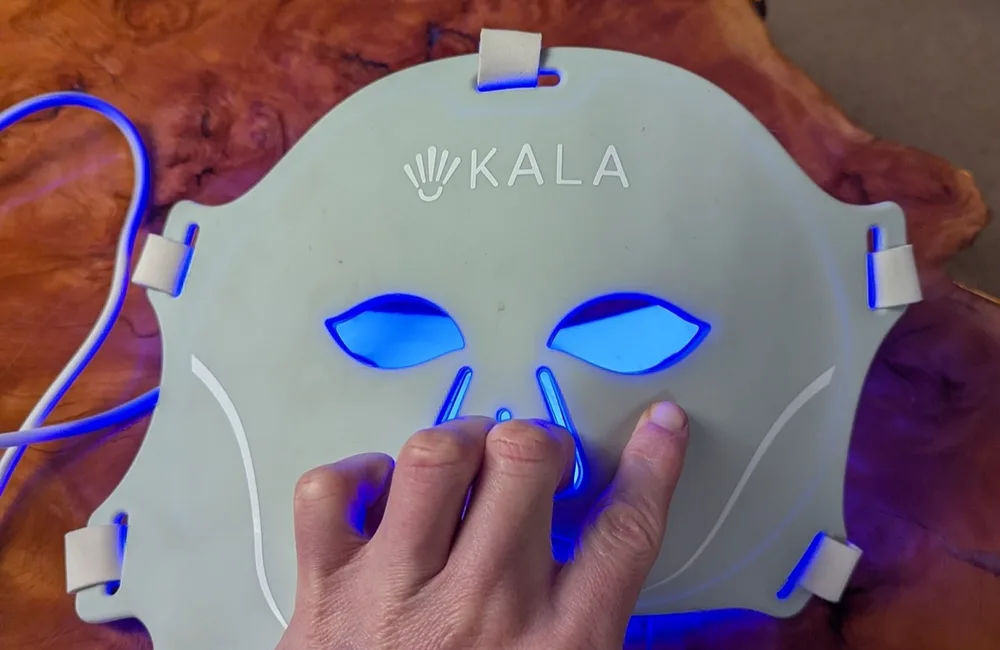
| Feature | Omnilux (Contour/Clear) | Kala Mask |
|---|---|---|
| Best For | Targeted protocols (anti-aging or acne) | Versatility, custom modes, and triple wavelengths |
| Wavelengths | Red 633nm & NIR 830nm (Contour) Red 633nm & Blue 415nm (Clear) | Red 630nm, NIR 830nm, Blue 465nm |
| LED Count | 132 LEDs (66 dual-chip bulbs) | 66 triple-chip LEDs |
| FDA Status | Cleared for wrinkles and acne | FDA-cleared |
| Key Advantage | Decades of published clinical trials | Triple wavelengths in a single mask |
For detailed data on Kala, read my Kala Red Light Therapy Mask Review and check out the Kala vs Omnilux comparison guide. You can also see how the Rouge Elite compares in my Rouge Elite Mask vs Omnilux review.
Buyer's Checklist for LED Masks
When shopping for an LED face mask, look for these three factors:
- FDA Clearance and Safety: Verify the mask has FDA clearance as a Class II medical device with built-in eye shielding.
- Verified Wavelengths: Look for 630 to 660nm visible red, 810 to 850nm near-infrared, and 415 to 465nm blue if targeting acne.
- Sufficient Irradiance: Aim for 30 to 50 mW/cm² at the skin surface to ensure adequate photon density.
To calculate your exact treatment duration, use my Red Light Dose Calculator.
Reviewed by: Daryl Stubbs, CAT(C), Holistic Nutritionist
Award-winning Athletic Therapist with 12+ years of clinical experience integrating recovery modalities.
Related Clinical Resources
- Recommended Guide: Read my full, hands-on review of the best red light therapy panels for deeper clinical insights.
- Clinical Guide: Red Light Therapy Mask for Skin Rejuvenation
- Clinical Guide: Red Light Therapy Mask for Wrinkles & Fine Lines