Welcome to our clinical review of the Kala Red Light Mini 2.0. As a Certified Athletic Therapist and clinical researcher, I evaluate photobiomodulation tools based on optical specifications and peer-reviewed literature rather than marketing claims. The Kala Mini 2.0 provides clinical wavelengths in a battery-powered, portable format for targeted rehabilitation.
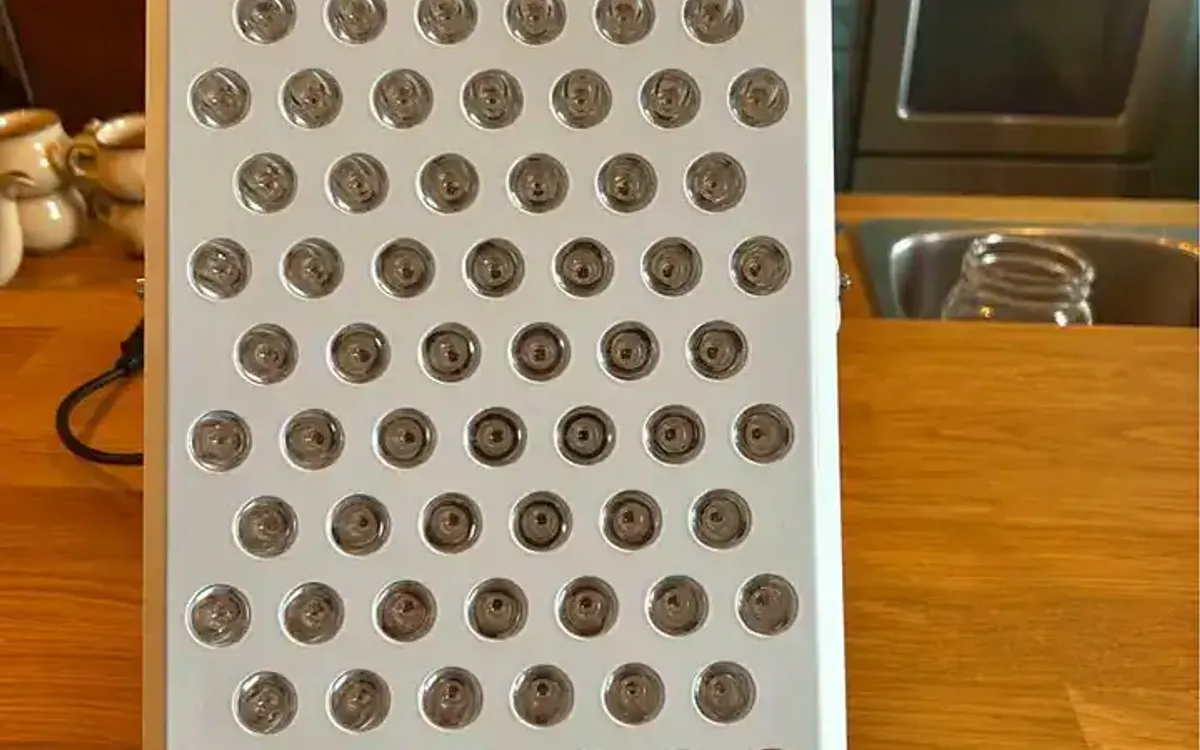
I look for devices that deliver measurable pain relief and support recovery. Patients need practical tools they can use consistently at home. The Kala Mini 2.0 delivers clinical wavelengths in a battery-powered, portable format.
Key Specifications at a Glance
| Spec | Kala Mini 2.0 |
|---|---|
| Wavelengths | 660nm (red) + 850nm (near-infrared) |
| Power Source | Battery-powered (rechargeable) |
| LED Type | 5W clinical-grade LEDs |
| Goggles Required | No |
| Coverage | Targeted / spot treatment |
| Best For | Joints, sinuses, face, travel |
| Brand Origin | Canadian (Kala Therapy Inc.) |
| Certifications | FDA Class II Medical Device, Health Canada cleared |
Clinical Experience and Usability
The simplicity of the Mini 2.0 is its biggest asset. Many patients feel overwhelmed by large, wall-mounted red light panels. The Mini 2.0 removes that barrier.
You do not need a dedicated wall outlet or mounting hardware. You charge the internal battery, power it on, and hold it over the inflamed joint or muscle. This ease of use encourages patient compliance, which is the most critical factor for achieving results with photobiomodulation.
Another practical advantage is the optical calibration that eliminates the need for goggles. Large panels like the Kala Pro require eye protection due to their high irradiance. The Mini 2.0 is calibrated so it can be used safely around the face and eyes without goggles.
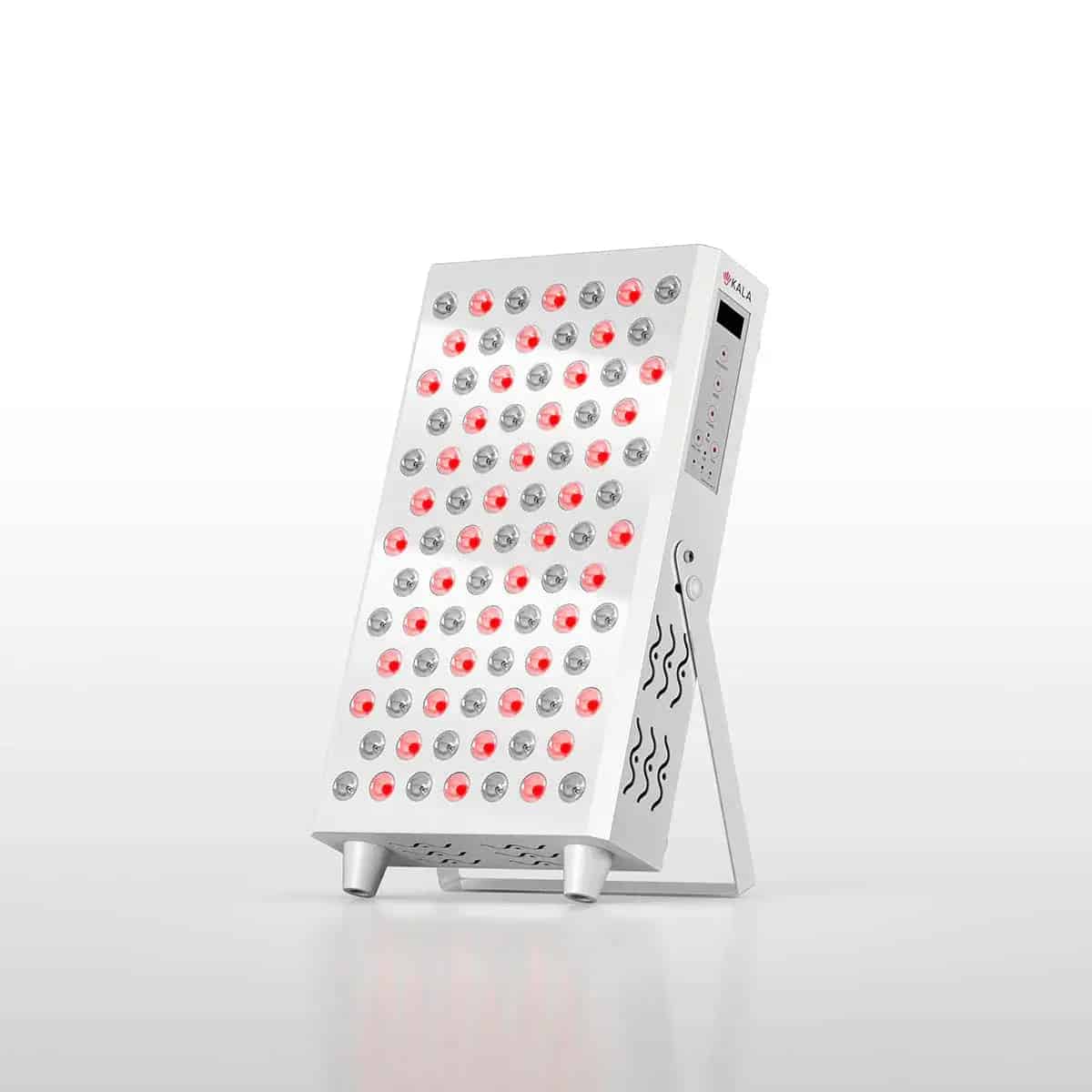
I frequently recommend this device for individuals managing chronic sinus congestion or localized joint discomfort. They position it over the sinus cavities or target joint for 5 to 10 minutes, supporting local blood flow.
Light Output and Wavelength Mechanics
The Mini 2.0 uses the same 660nm red and 850nm near-infrared wavelengths found in Kala's full-sized panels. These wavelengths sit in the optical window for photobiomodulation (PBM), penetrating tissue without being blocked by water or melanin.
At the cellular level, mitochondria absorb these photons through cytochrome c oxidase. This activates ATP (adenosine triphosphate) synthesis, giving cells the energy to repair tissue and manage metabolic waste.
The process also promotes nitric oxide release, which dilates blood vessels and increases local blood flow to bring oxygen and nutrients to the injured area.
The 660nm red light acts on superficial tissues, supporting skin texture and minor surface wound healing. The 850nm near-infrared wavelength penetrates deeper, reaching muscle bellies, joint capsules, and tendon attachments.
A 2016 review by Ferraresi, Huang, and Hamblin (J Biophotonics, PMCID: PMC5167494) confirmed that pre-exercise PBM reduces muscle damage markers. While the Mini 2.0 cannot cover large muscle groups at once, treating an isolated strain or tendon gives targeted recovery support.
Patients consistently find the Mini helpful for localized problems like patellar tendinopathy or wrist sprains.
Build Quality and Design
Kala built the Mini 2.0 using the same 5W LEDs found in their Pro and Elite panel lines, so output power is not compromised for size.
The casing feels sturdy and durable. The device holds FDA Class II clearance and Health Canada registration, which provides assurance regarding electrical safety and manufacturing standards.
Portable Convenience
The built-in battery changes how and where you can use light therapy. You can run a session on the couch, at your desk, or while traveling.
Targeted sessions take only 5 to 10 minutes per area. Because treatment times are short, patients are much more likely to maintain a daily routine.
In my practice, I recommend the Kala Mini to patients who want targeted spot treatment for knees, ankles, wrists, or sinuses without investing in a full panel. The fact that it requires no goggles makes facial and sinus treatment simple and accessible.
Pros and Cons
Pros:
- Battery-powered and portable with no wall outlet required during sessions.
- Calibrated for safe facial and sinus application without protective goggles.
- Features 5W clinical LEDs with 660nm and 850nm wavelengths.
- Holds FDA Class II clearance and Health Canada registration.
- Accessible price point for beginners exploring red light therapy.
- Designed by a Canadian company with domestic customer support.
Cons:
- Small treatment window is ineffective for full-body coverage or large muscle groups.
- Lacks the pulsing modes found on Kala Pro panels.
- Must be held by hand since no stand is included.
- Users wanting broad coverage will eventually need a larger panel.
Who Should Choose the Kala Mini 2.0
The Mini 2.0 is built for precise, localized treatment. It is well suited for an arthritic knee, stiff wrist, or stubborn sinus congestion, as well as for frequent travelers who want a compact recovery device.
If you are new to light therapy and want to test its benefits on a single problem area before buying a full panel, the Mini 2.0 provides an accessible entry point.
Who Should Choose a Larger Panel
If your primary goal is post-workout recovery across major muscle groups, lower back pain, or full-body systemic benefits, the Mini 2.0 will feel too slow and limited. In those cases, I advise starting with the Kala Pro Panel.
Treating your entire back with a spot-treatment light requires constant repositioning. A larger panel covers the area in a single 10-minute session and includes customizable pulsing frequencies at 292 Hz and 586 Hz.
Kala Mini vs Kala Pro Comparison
| Feature | Kala Mini 2.0 | Kala Pro Panel |
|---|---|---|
| Coverage | Targeted / spot | Half-body |
| Power | Rechargeable battery | Plug-in AC power |
| Pulse Modes | No | Yes (292 Hz, 586 Hz, custom) |
| Digital Display | No | Yes |
| Goggles Required | No | Yes (included) |
| Best For | Travel, sinuses, isolated joints | Daily athletic recovery, back pain, full sessions |
Both devices use quality LEDs and proven wavelengths. The Mini is your tool for localized spot treatments, while the Pro is suited for daily whole-body recovery.
Final Verdict
The Kala Mini 2.0 does its job well. It provides therapeutic light in a portable, battery-powered format that fits easily into daily life. For localized joint discomfort, sinus relief, and facial applications, it is a practical tool.
The fact that you do not need goggles makes it especially easy to use around the face and sinuses, helping patients maintain consistent treatment habits.
If you understand its coverage limits and want a focused spot-treatment device, the Kala Mini delivers reliable performance. For a full breakdown of their larger systems, see my hands-on Kala review.
Related Clinical Resources
- Recommended Guide: Read my full, hands-on review of the best red light therapy panels for deeper clinical insights.
- Related Review: Check out my comparative analysis on the Kala Red Light Therapy Frequency Chart.