In my clinical practice, patients frequently ask about the hydrogen water machine vs reverse osmosis debate. They want to know which setup will best support their hydration, athletic recovery, and daily health. A common misunderstanding is that these two technologies compete directly against each other.
They address completely different aspects of water quality. A reverse osmosis system purifies water by removing contaminants, while a hydrogen water machine enriches clean water with therapeutically active molecular hydrogen. For optimal daily hydration, many patients benefit from using both technologies together.
What reverse osmosis does
Reverse osmosis (RO) is a filtration process designed to purify water. It forces tap water under pressure through a semi-permeable membrane. This microscopic filter allows water molecules to pass while blocking larger dissolved solids, minerals, and chemical contaminants.
The process removes chlorine, chloramines, fluoride, nitrates, and heavy metals like lead and arsenic, along with residual pharmaceuticals. The result is pure water, typically registering a Total Dissolved Solids (TDS) reading below 20 parts per million (ppm), compared to the 150 to 400 ppm found in typical municipal tap water.
In my private clinic, I see how poor source water affects recovery and general wellness. While municipal water across British Columbia is generally well treated, many patients rely on private wells or live in older homes with aging copper and lead plumbing. For these individuals, an RO system provides a foundational purification barrier.
RO systems focus strictly on filtration and removal. They produce cleaner water, but they do not add dissolved therapeutic gases. Standard countertop or under-sink RO units, such as the Echo RO Tankless, are filtration devices that do not generate dissolved molecular hydrogen.
What a hydrogen water machine does
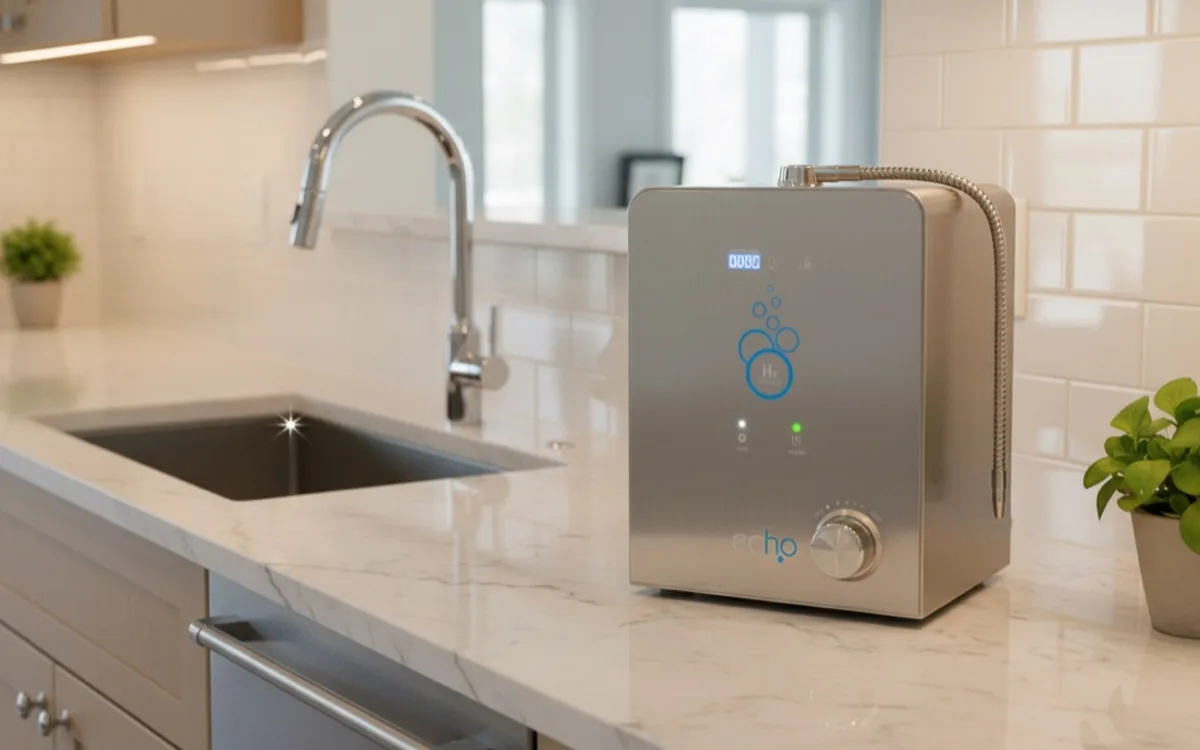
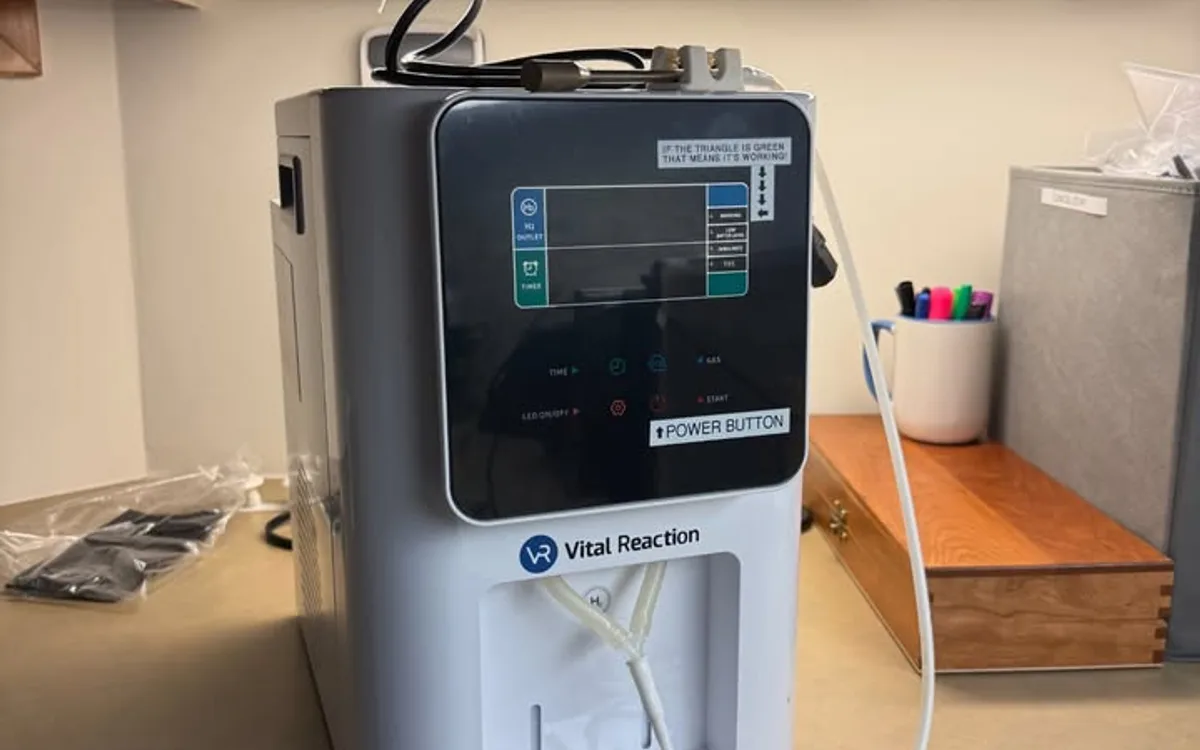
A hydrogen water machine operates on an entirely different principle. It uses Solid Polymer Electrolyte / Proton Exchange Membrane (SPE/PEM) electrolysis to split water molecules and infuse dissolved molecular hydrogen gas (H2) directly into your drinking water.
The goal is to deliver a therapeutic concentration of molecular hydrogen, typically ranging between 1.0 and 8.0 mg/L depending on the machine and cycle duration.
Molecular hydrogen is the active agent behind the clinical research. As the smallest molecule in existence, H2 rapidly diffuses across cell membranes and reaches intracellular structures, including mitochondria.
Research shows that H2 acts as a selective antioxidant. Unlike non-selective antioxidants that neutralize all reactive oxygen species (ROS), H2 targets cytotoxic free radicals like hydroxyl radicals (•OH) while preserving the basal ROS necessary for normal immune signaling (Ohta, Pharmacol Ther, 2014; PMID: 24769081).
Athletes and patients managing chronic inflammatory issues in my practice report reduced delayed onset muscle soreness (DOMS), faster recovery between sessions, and improved stamina.
These observations align with clinical findings. A 2020 randomized controlled trial involving 60 adults with metabolic syndrome showed that high-concentration hydrogen-rich water significantly improved BMI, fasting glucose, and oxidative stress markers over 24 weeks (LeBaron et al., Diabetes Metab Syndr Obes, 2020; PMID: 32273740).
Filtration alone cannot produce these physiological responses. A hydrogen water machine does not remove heavy metals; its function is H2 delivery.
Head-to-head comparison: what each system provides
| Feature | Reverse Osmosis System | Hydrogen Water Machine |
|---|---|---|
| Primary function | Removes contaminants (TDS, heavy metals, chlorine, fluoride) | Infuses dissolved molecular hydrogen (H2) into water |
| Output water quality | Very pure, <20 ppm TDS | Source water quality + 1.0 to 8.25 mg/L dissolved H2 |
| Dissolved hydrogen | None (0 ppm H2) | 1.0 to 8.25 mg/L (Echo Flask: 6.07 mg/L at 10 min, 8.25 mg/L at 20 min) |
| Removes chlorine | ✓ Yes | ✗ No (unless source water is pre-filtered) |
| Removes heavy metals | ✓ Yes (95%+ rejection rate) | ✗ No |
| Anti-inflammatory benefit | Indirect (lowering chemical intake reduces oxidative stress) | Direct: H2 modulates NF-κB and reduces inflammatory cytokines |
| Electrolysis technology | None | SPE/PEM membrane |
| Price range (USD) | $200 to $600 (countertop/under-sink) | $299 (Echo Flask) to $3,499 (Echo Ultimate) |
| Installation | Under-sink plumbing or countertop line | Portable bottle, countertop, or under-sink |
| Ongoing costs | Membrane and filter replacements ($50 to $150/year) | Periodic filter replacements and descaling |
| Clinical research base | Contaminant removal and toxicology data | Over 1,500 published papers on molecular hydrogen therapy |
Why these systems complement each other
Reverse osmosis and hydrogen electrolysis handle different stages of water treatment. RO is an upstream process that cleans and demineralizes the water. Hydrogen infusion is a downstream process that enriches purified water with therapeutic gas.
Feeding RO water into an SPE/PEM hydrogen generator protects the device. Low-mineral water prevents scale buildup on the platinum-coated plates, extending the lifespan of the electrolysis cell.
In my clinic, I advise patients with well water or hard city water to adopt a two-stage setup: RO filtration first, followed by hydrogen infusion.
The Echo One: RO and hydrogen combined
For new installations, the Echo One integrates tankless reverse osmosis filtration, SPE/PEM hydrogen infusion, and UV sterilization into a single under-sink system.
This design generates 2 to 4 ppm of dissolved hydrogen using water that has already passed through multi-stage RO filtration. It eliminates the need to plumb two separate systems beneath the sink.
The added UV stage addresses biological pathogens that might bypass mechanical filters, which is valuable for rural homes on well water.
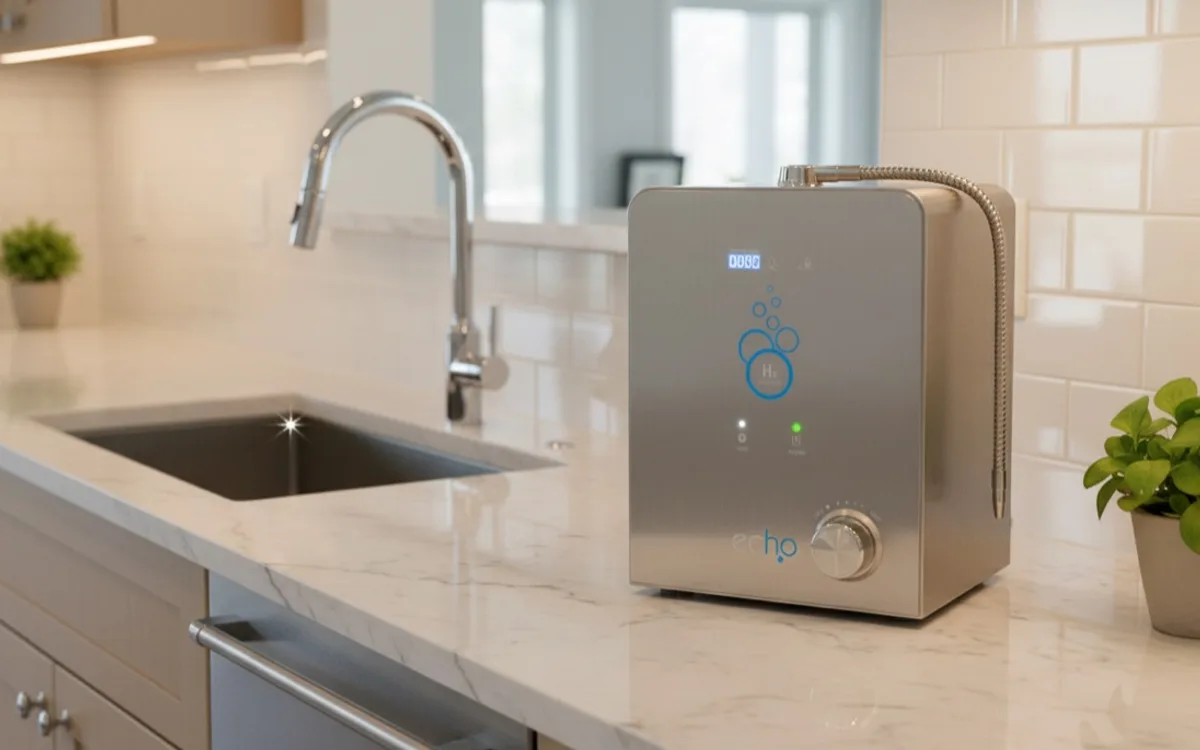
If you already have a functional RO system, adding a dedicated hydrogen machine is the more economical route. The Echo Ultimate delivers 1.5 ppm on demand from a dedicated tap, while the portable Echo Flask allows you to infuse clean RO water anywhere. Read my full breakdown in our hydrogen water machine guide.
Clinical Note: Patients who experience the best results from hydrogen water start with clean source water. Running hard water through an electrolysis generator leads to mineral scaling and lower H2 output over time. RO pre-filtration preserves both the water quality and your equipment.
Key factors for your decision
Your source water quality
If your home connects to reliable municipal water, a quality carbon block filter may be sufficient to clear chlorine and volatile organic compounds before hydrogen infusion.
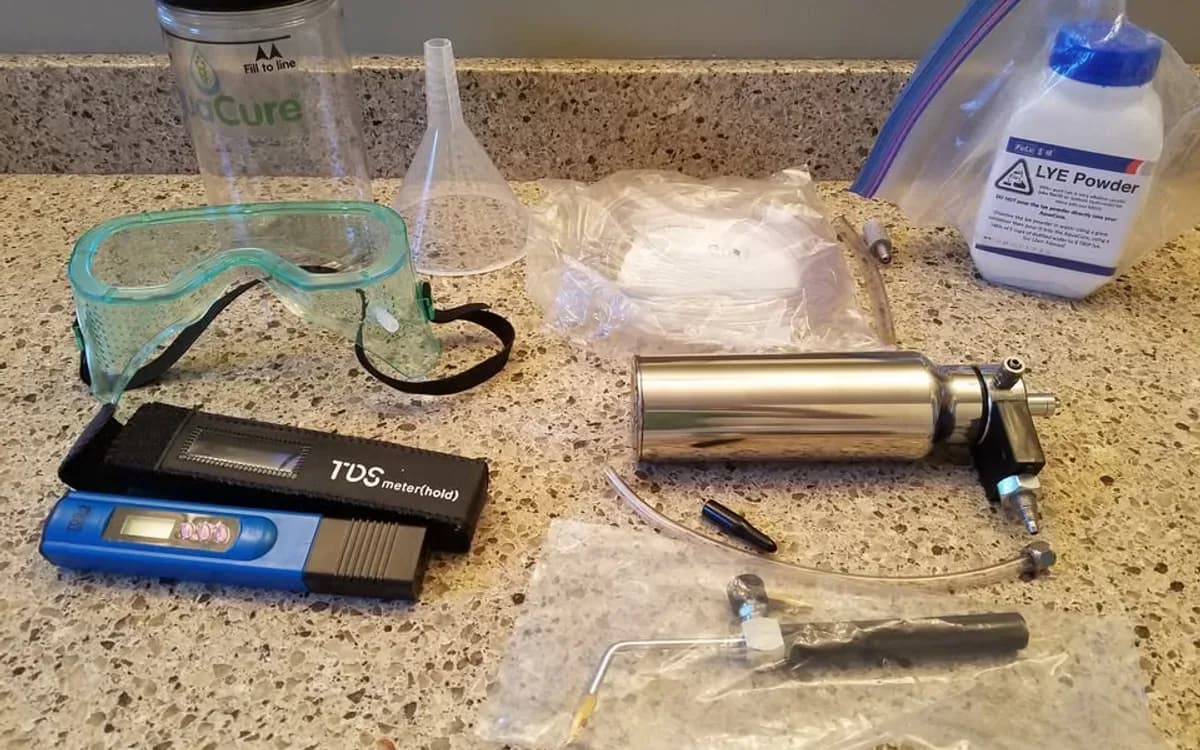
If you use private well water or reside in an older home with aging pipes, testing with a TDS meter helps determine whether full reverse osmosis is necessary to remove dissolved solids and heavy metals.
Your primary health goals
Reverse osmosis lowers your toxic burden by removing unwanted contaminants.
Hydrogen water provides targeted physiological support for exercise recovery, mitochondrial efficiency, and inflammation management. A 2024 systematic review of 30 human trials highlighted consistent benefits for exercise endurance and cardiovascular markers (Deryabin & Molanouri Shamsi, Int J Mol Sci, 2024; PMCID: PMC10816294). If athletic recovery is your focus, RO alone will not produce those results.
Budget and plumbing constraints
Standalone RO units generally cost between $200 and $600. Standalone hydrogen systems range from $299 for the portable Echo Flask to $3,499 for the under-sink Echo Ultimate. Buying separate units requires two installation steps, whereas an integrated system like the Echo One combines both functions into one chassis.
System recommendations
Choose an RO system alone if:
- Your primary concern is water purity due to high TDS, well water, or old plumbing.
- You do not currently need the therapeutic anti-inflammatory benefits of molecular hydrogen.
- You are working with a strict upfront budget and need to prioritize contaminant removal first.
Choose a hydrogen water machine alone if:
- You already have safe municipal water or an existing home filtration system.
- Your main focus is athletic recovery, energy, and antioxidant support.
- You want a portable bottle like the Echo Flask to use at the gym and office.
Choose an integrated RO and hydrogen system if:
- You want complete purification and high-ppm hydrogen infusion in a single appliance.
- You are outfitting a new home or kitchen remodel and want clean under-sink plumbing.
- You have well water and want pristine baseline water before infusing molecular hydrogen.
- Multiple household members will drink the water daily, making whole-home on-demand flow cost effective over time.
Clinical recommendation
Most patients I consult already have basic filtration at home and want to add therapeutic hydrogen. In those situations, adding an Echo Flask or an Echo Ultimate provides proven H2 dosing with minimal hassle.
If you are starting fresh and need both filtration and hydrogen enrichment, an integrated system like the Echo One provides a clean, single-system solution.
Remember that hydrogen generators do not filter out lead or pesticides, and RO filters do not generate dissolved H2. Pairing clean water with therapeutic hydrogen gives you the benefits of both technologies.
Clinical Note: Reverse osmosis and hydrogen water machines solve different problems. For athletic patients dealing with post-training soreness, a hydrogen machine delivers the active therapeutic molecule they need. But if your tap water contains elevated heavy metals or nitrates, purification comes first. The Echo One handles both stages in one system.
Related Clinical Resources
- Recommended Guide: Read my full, hands-on review of the best hydrogen water bottles for deeper clinical insights.
- Related Review: Check out my comparative analysis on Hydrogen Water Tablets.