This mito red light therapy review covers my clinical and personal evaluations of the MitoPRO and MitoAdapt panels. As a Certified Athletic Therapist (CAT(C)) and researcher, I evaluate photobiomodulation (PBM) devices based on tissue recovery rates and patient feedback. Mito Red Light panels consistently rank among the most effective at-home recovery tools I recommend.
Direct Verdict: Based on clinical testing, Mito Red Light panels are a reliable investment. They deliver strong power output, verified low EMF emissions, and targeted wavelengths for cellular repair.
Key findings from clinical testing
- The MitoPRO 1500X is my primary recommendation for full-body coverage, combining high power output with verified EMF shielding.
- The MitoAdapt 2.0 series uses dual-chip LEDs and mobile app controls, making it practical for custom wavelength setups.
- These panels perform well for skin health, muscle recovery, and joint pain management.
Top picks at a glance
Best Value
MitoPRO 750X
Practical balance of size, power, and price for half-body treatments.
View PanelWhy you can trust my evaluation
My assessment rests on clinical metrics:
- I integrate PBM panels into active rehabilitation protocols in my private clinic.
- I verify nanometer distributions so the light reaches targeted tissue depths.
- This evaluation measures build quality, power stability, and EMF outputs directly.
Pros and cons of Mito Red Light
Pros:
- High irradiance allows shorter 10 to 15 minute treatment sessions.
- Combines key red (630nm/660nm) and NIR (810nm/830nm/850nm) wavelengths.
- Internal shielding keeps EMF output low at treatment distances.
- Sturdy metal housings, solid mounting hardware, and quiet cooling fans.
Cons:
- A clinical-grade panel requires an upfront budget.
- Larger full-body setups require a dedicated door mount or stand.
Watch my video review
For a visual demonstration of the panels, watch my overview:
How to choose your panel
- Determine Your Goal: Target skin health (primarily red light) or deep joint recovery (NIR light).
- Evaluate Your Space: Ensure you have a suitable door or wall area for larger panels.
- Wavelength Profile: Confirm the device supports the wavelengths required for your specific recovery goals.
Clinical applications
PBM works by stimulating Cytochrome C Oxidase in the mitochondria, accelerating ATP production:
- Skin Health: Stimulating collagen production helps improve conditions like eczema and psoriasis.
- Muscle Repair: Supporting mitochondrial function reduces delayed-onset muscle soreness (DOMS).
- Joint Recovery: Lowering local inflammatory markers eases chronic arthritis discomfort.
- Sleep Support: Evening sessions support natural circadian rhythms by encouraging melatonin synthesis.
Top Mito Red Light panels
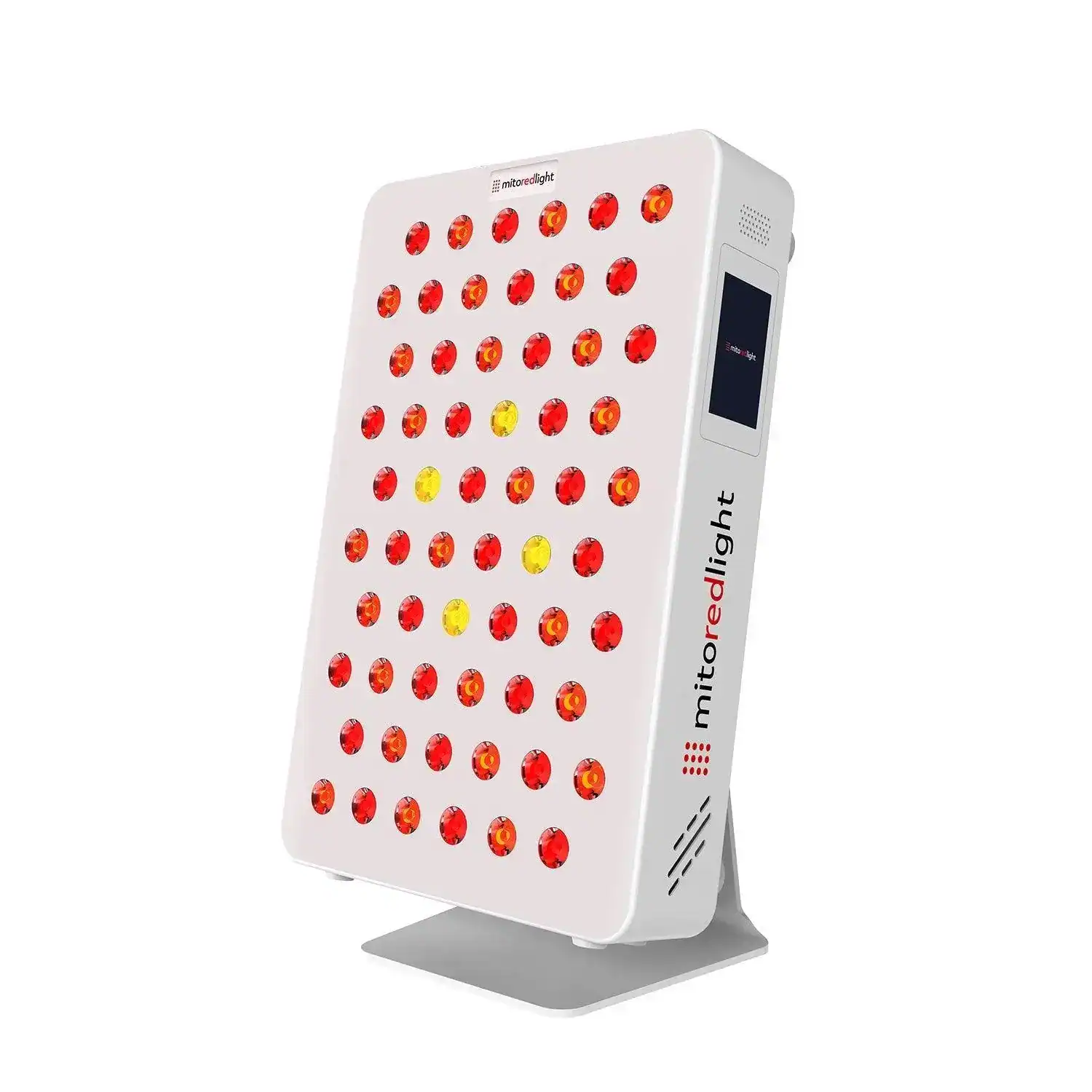
MitoPRO 300X
Best for Targeted Treatments
Designed for joints, hands, or facial skincare. Compact and portable.
Get The Best Deal
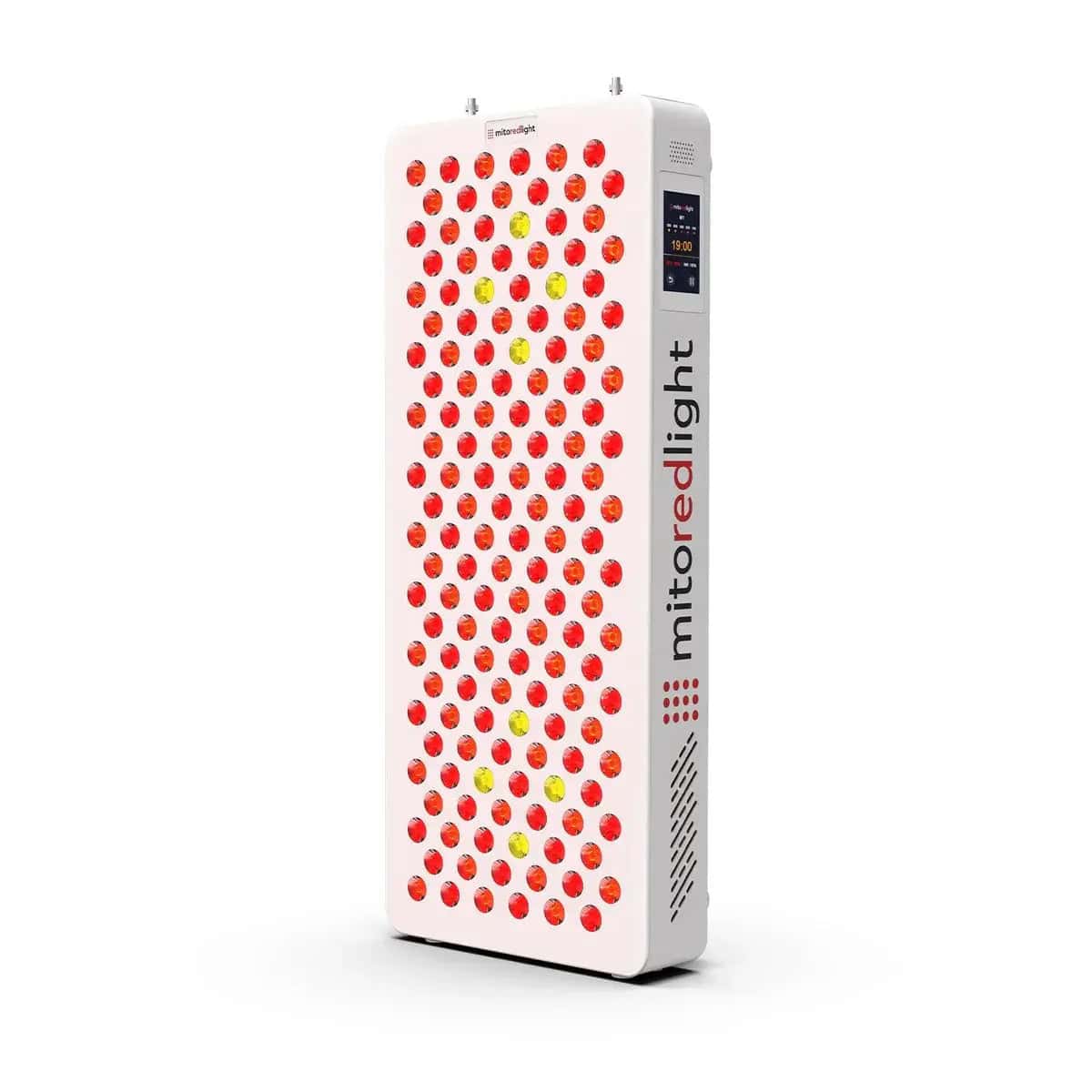
MitoPRO 750X
Best for Half-Body Coverage
Popular mid-size option. Delivers half-body coverage for back or leg recovery.
Get The Best Deal
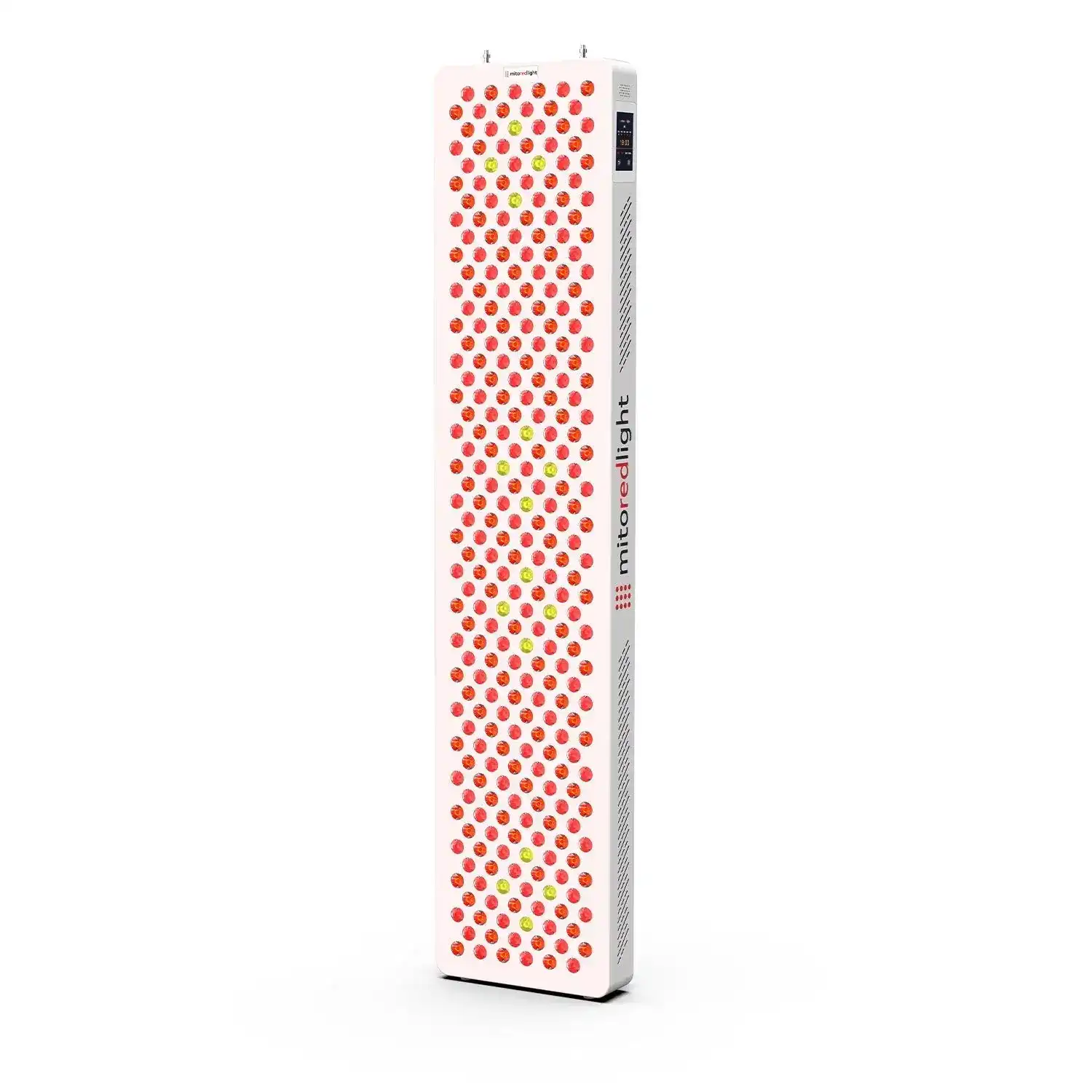
MitoPRO 1500X
Best for Full Body Treatments
Full-height panel for systemic recovery, inflammation management, and full-body treatments.
Get The Best Deal
MitoPRO series comparison
The MitoPRO lineup represents the brand's core panels.
MitoPRO X Series: Specifications
| Feature | MitoPRO 300X | MitoPRO 750X | MitoPRO 1500X | MitoPRO MegaX | MitoPRO EliteX |
|---|---|---|---|---|---|
| Dimensions | 13" X 10" X 3" | 23" X 10" X 3" | 43" X 10" X 3" | 64" x 17" x 3" | 66" X 25" X 3" |
| LED Wavelengths | 590nm, 630nm, 660nm, 810nm, 830nm, 850nm | ||||
| LED Count | 60 lens / 120 chip | 150 lens / 300 chip | 300 lens / 600 chip | 600 lens / 1200 chip | 900 lens / 1800 chip |
| Irradiance* | >130 mW/cm² | >160 mW/cm² | >160 mW/cm² | >130 mW/cm² | >130 mW/cm² |
| Weight | 7.0 lb | 15.0 lb | 25.0 lb | 60.0 lb | 80.0 lb |
| Best Used For | Targeted | Half Body | Mostly Full Body | Full Body | Full Body |
| Price | $449.00 | $749.00 | $1299.00 | $2649.00 | $3899.00 |
| Warranty | 3 years | ||||
*Irradiance at 6 Inches (mW/cm²)
MitoAdapt 2.0 series: app-based controls
The Adapt series introduces smartphone app controls and customized wavelength modes:
- MitoAdapt Min 2.0: Portable size for targeted treatments and travel.
- MitoAdapt Mid/Max 2.0: Large panels delivering high-intensity output for full-body home or clinic sessions.
Mito compared to Joovv and Hooga
- Joovv: Offers a modular setup but carries a substantial brand markup.
- Hooga: Budget-focused, but lacks the multi-wavelength distribution and internal shielding of Mito.
- Mito Red Light: Balances third-party validated power output with competitive pricing.
Read more of my red light therapy reviews
- Hooga Red Light Therapy Review
- PlatinumLED Therapy Lights Review
- Orion Red Light Therapy Review
- Kala Red Light Therapy Review
Final verdict
Mito Red Light devices are well-engineered panels for both clinical practices and home users. If you are looking to support recovery, joint comfort, and cellular health, they are a practical and durable choice.
Related clinical resources
- Read my full review of the best red light therapy panels for panel comparisons.