In my clinical practice as a Certified Athletic Therapist and biohacking researcher, patients constantly ask me for reliable Hooga red light therapy reviews. I have spent the last few months running these photobiomodulation (PBM) panels through hands-on evaluation in my clinic to determine if these budget-friendly devices deliver the cellular energy and tissue repair my patients need.
Hooga offers an accessible entry point into clinical light therapy for patients prioritizing value. While they do not reach the raw power output of top-tier medical panels, their Pro series strikes a solid balance of features and performance. The Hooga Pro 300 remains my primary recommendation for most at-home users.
The Clinical Science of Photobiomodulation
Before prescribing any at-home modality, I evaluate the biological mechanism. Red light therapy uses specific wavelengths, typically 630 to 670 nm for red light and 810 to 880 nm for near-infrared (NIR) light. These wavelengths penetrate dermal and subdermal tissues to stimulate mitochondria directly.
When cytochrome c oxidase absorbs these photons, it triggers a cascade of cellular benefits. Patients often report a noticeable drop in delayed onset muscle soreness (DOMS) and joint stiffness when using these protocols consistently:
- ATP production: Boosts cellular energy (Adenosine Triphosphate) for tissue repair and regeneration.
- Oxidative balance: Helps neutralize excess free radicals to support cellular health.
- Nitric oxide release: Encourages local vasodilation, improving blood flow and nutrient delivery to recovering muscles.
- Inflammation support: Aids in managing acute joint discomfort and swelling during rehab.
- Collagen stimulation: Promotes fibroblast activity for skin elasticity and wound recovery.
Hooga Brand Evaluation: Clinical Strengths and Trade-offs
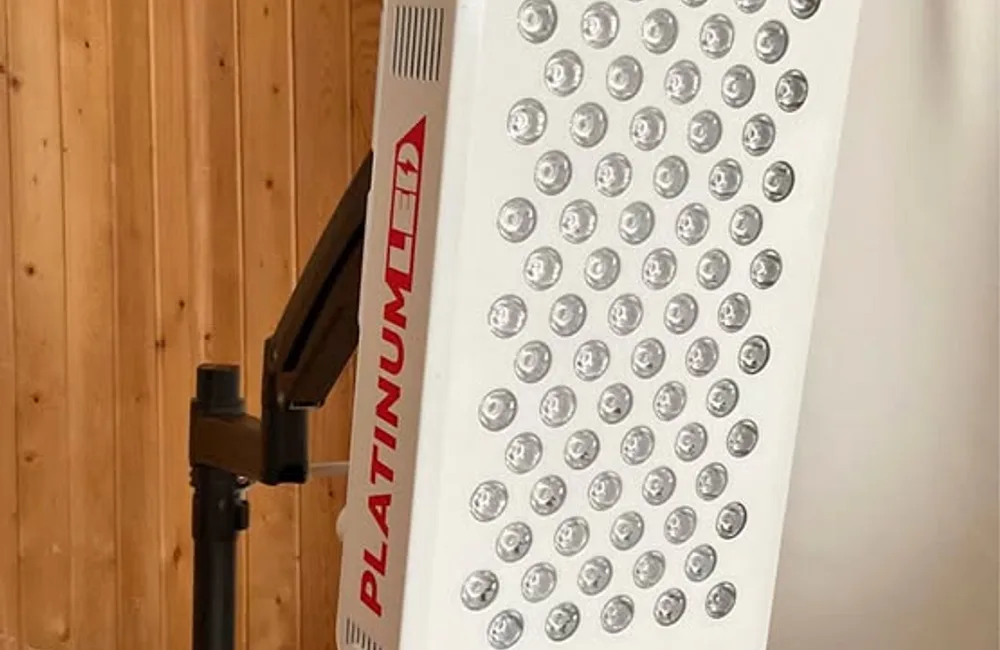
Is Hooga a reliable brand for home recovery? Based on hands-on testing, Hooga fills an important niche by making effective PBM affordable without sacrificing core functionality.
Strengths:
- Affordable pricing across the entire product catalog.
- Broad lineup ranging from the targeted Hooga HG300 to the full-body Hooga Pro 1500 and specialized Hooga Red Light Mask.
- Built-in timers and stands on the Pro series to help patients follow precise session timing.
- Reliable user reports for pain management, muscle recovery, and skin support.
Trade-offs:
- Lacks third-party diagnostic lab reports for irradiance compared to premium clinical brands.
- Entry-level HG series relies on lightweight plastic housings rather than heavy-duty aluminum.
- Lower-tier models lack the pulsing modes (like 10 Hz) used for specific neurological protocols.
Clinical Protocols: Dosing Hooga Devices
Maximizing clinical outcomes requires understanding the biphasic dose response: more light is not always better, and excessive exposure can diminish therapeutic returns. Finding the right dosage is necessary for tissue adaptation.
- Distance: Position the panel 6 to 12 inches from the target area to ensure even light distribution without excess heat.
- Duration: Start with 5 to 10 minute sessions per area, gradually increasing to 15 to 20 minutes as tolerance develops.
- Frequency: Use the device 3 to 5 times per week. Consistent dosing drives cellular changes more effectively than sporadic long sessions.
- Safety: Always wear the included eye protection. Consult your doctor if you have photosensitive conditions or active malignancies.
Hooga HG Series: Entry-Level Panels
The HG series is Hooga's baseline offering. These panels use single-chip LEDs emitting two standard therapeutic wavelengths: 660 nm Red and 850 nm NIR.
When comparing the Hooga HG200 vs HG300, the main difference is surface area coverage. The HG300 provides a wider treatment field for larger muscle groups like the quadriceps or upper back, whereas the HG200 is compact and suited for single joints like a knee or elbow. Note that the HG series lacks built-in stands or timers.
- Target user: Budget-conscious users needing basic localized light exposure.
- Specs: Single-chip LEDs (660 nm Red, 850 nm NIR).
- Limitations: Requires manual timing and external mounting or propping.
Hooga Pro Series: The Clinical Standard
The Hooga Pro series offers practical clinical utility, resolving the setup limitations of the HG series with better hardware.
The Hooga Pro 300 is my standard recommendation for most patients. It upgrades to dual-chip LEDs so every diode emits both red and NIR light for uniform coverage. The integrated digital timer and adjustable stand make it easy to maintain accurate session timing. Patient compliance with the Pro 300 has been consistently high in my clinic.
- Target user: Most home users looking for reliable daily recovery with built-in timing.
- Specs: Dual-chip LEDs (660 nm Red, 850 nm NIR).
- Key features: Integrated stand, digital timer, flicker-free drivers, and modular linking capability.
For larger treatment areas, the Hooga Pro 750 and Pro 1500 offer half-body and full-body coverage using the same dual-chip system.
Hooga Ultra Series: Advanced Features
The Hooga Ultra series includes higher diode density and multi-wavelength options.
Devices like the Hooga Ultra 360 and Ultra 1500 use quad-chip LEDs emitting four wavelengths (630, 660, 810, and 850 nm) simultaneously. The 810 nm wavelength penetrates deep into dense muscle and connective tissue. These units also include a 10 Hz pulse mode for specialized protocols.
- Target user: Users wanting multi-wavelength coverage and pulsed frequencies.
- Specs: Quad-chip LEDs (630, 660, 810, 850 nm).
- Key features: All Pro series features plus adjustable brightness and 10 Hz pulsing.
Hooga HG vs Pro vs Ultra Comparison
The main differences between the HG, Pro, and Ultra series come down to diode design and control features:
| Feature | HG Series | PRO Series | ULTRA Series |
|---|---|---|---|
| Target User | Budget Beginner | Most Users | Advanced User |
| LED Technology | Single-Chip | Dual-Chip | Quad-Chip |
| Wavelengths | 2 (660, 850nm) | 2 (660, 850nm) | 4 (630, 660, 810, 850nm) |
| Built-in Timer | No | Yes | Yes |
| Included Stand | No | Yes | Yes |
| Pulse Function | No | No | Yes |
Hooga vs Mito Red Light: Quick Comparison
When comparing Hooga vs Mito Red Light, Mito operates at a higher price tier with independent third-party diagnostic data for irradiance and wavelength accuracy.
If you require independently tested clinical measurements, read my Mito Red Light Therapy Review. Mito fits data-focused buyers, while Hooga provides strong value for budget-conscious users.
Specialty Devices: Masks, Pods, and PEMF Mats
Hooga also produces targeted devices for specific body areas:
Hooga Red Light Mask The Hooga Red Light Mask contours directly over facial skin to target collagen synthesis and fine lines. It is lighter and easier to position for facial routines than a steel panel. See my guide to the best red light therapy masks for comparative testing.
Hooga Pod The Hooga Full Body Pod delivers 360-degree light exposure. It is built for dedicated athletes looking for full-body immersion, though it requires a higher budget and dedicated floor space.
Hooga PEMF Mat
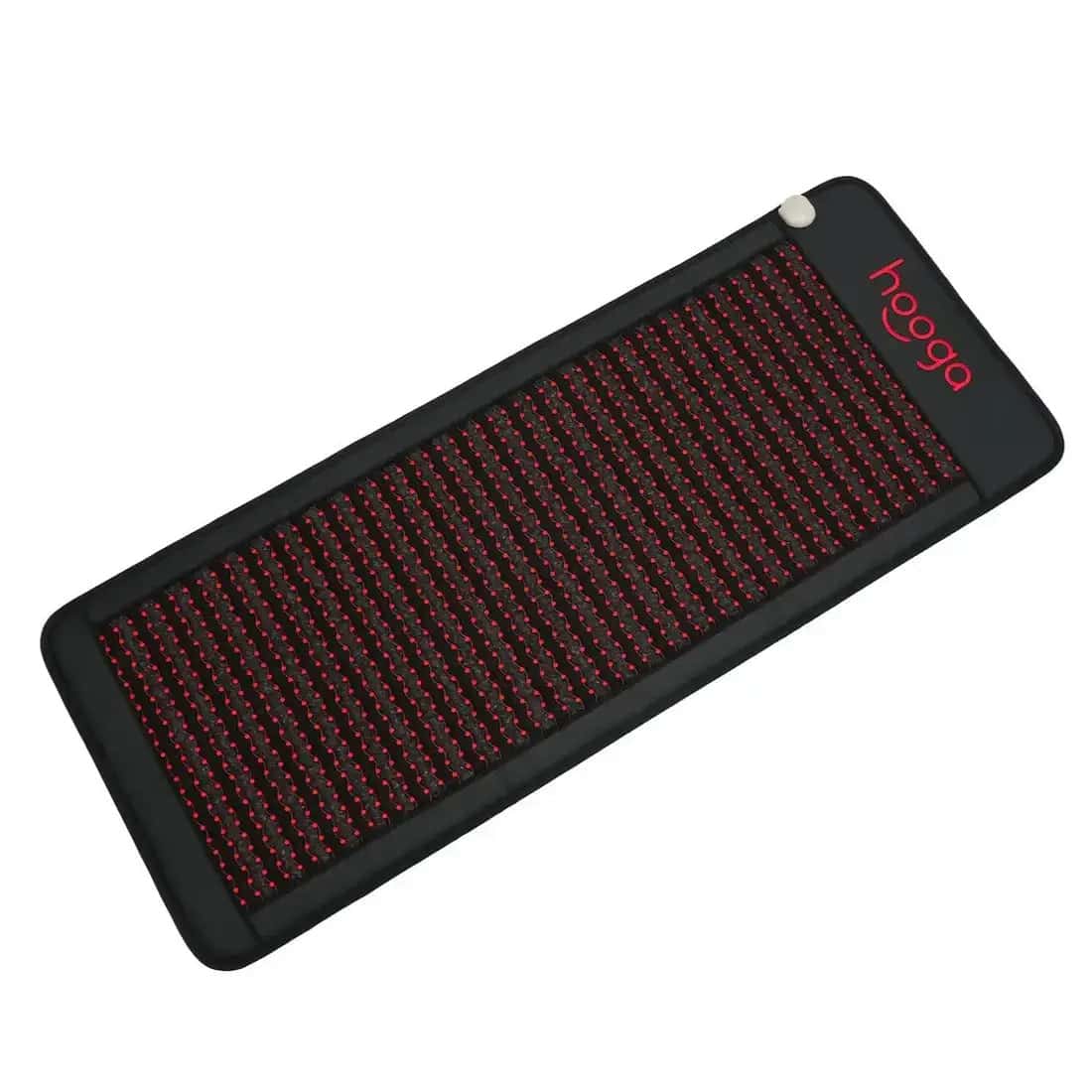
The Hooga PEMF Mat combines Pulsed Electromagnetic Field therapy with infrared heat. This pairing supports relaxation, eases muscle tension, and improves sleep quality. It is a solid choice in my guide to the best PEMF mats.
Final Clinical Verdict
The Hooga Pro 300 is the most practical investment in the lineup for home photobiomodulation. It delivers reliable power and straightforward timer controls at an accessible price point.
While premium brands offer deeper third-party test validation, Hooga makes at-home light therapy practical for everyday recovery and pain management. For verified laboratory diagnostics, check my guide to the best red light therapy panels. Otherwise, Hooga is a capable, budget-friendly option for home wellness.
Related Clinical Resources
- Related Review: Check out my comparative analysis on Infraredi Reviews.