Patients in my clinic frequently ask me to compare kala vs mito. As a Certified Athletic Therapist and clinical researcher, I evaluate red light therapy panels based on verified output and real patient results. For six months, I put both the Kala Pro Panel and the MitoPRO series through regular clinical testing, using both devices for patient rehabilitation and my own daily biohacking routines.
If you want a recovery setup with pulsed frequency modes and optional accessories, Kala delivers strong clinical utility. If your goal is maximum wavelength coverage from a standalone panel at a competitive price, Mito is a great option.
Kala Overview
Kala Therapy Inc. is a Canadian company known for high-output red light systems, backed by appearances on CBC's Dragons' Den and partnerships with Team Canada athletes. Their panel lineup includes the Mini 2.0, Pro Panel, and Elite Panel.
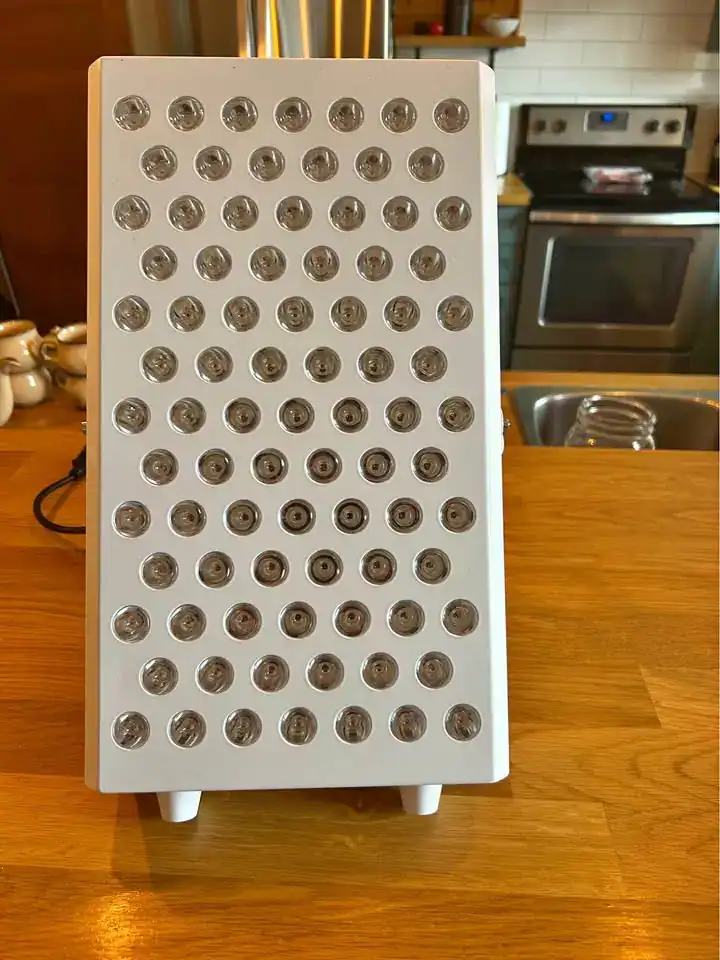
Kala focuses on two core, clinically validated wavelengths: 660nm red and 850nm near-infrared. These wavelengths fall squarely within the optical window where light penetrates human tissue efficiently to stimulate mitochondrial energy production.
What separates Kala's Pro and Elite panels is their Pulse Recovery+ mode. Most panels at this price point only provide continuous light output. Kala includes pulsed delivery at set frequencies. I use the 292 Hz setting regularly in my practice to help patients downregulate stress and manage chronic discomfort.
They also provide a 586 Hz mode along with custom frequency settings on the digital display, allowing specific therapeutic programming.
Kala builds these panels with 5W clinical-grade LEDs, carrying FDA Class II Medical Device registration (FDA #3016171836) and Health Canada clearance. In testing, they registered zero EMF emissions from 4 to 6 inches away. The Pro Panel includes protective eyewear and a door-mount kit.
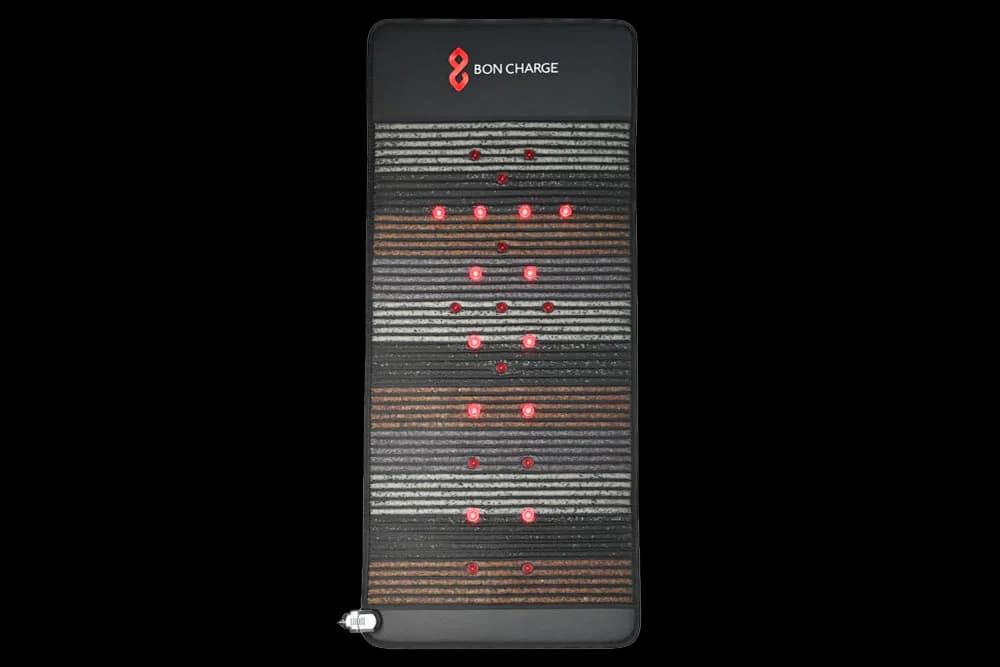
Kala offers a 30-day trial period. Beyond panels, they make a complete line of recovery tools, including a triple-wavelength face mask, therapy wand, and Infrared PEMF Mat. Read more details in my complete Kala product review.
Mito Red Light Overview
Mito Red Light is a US brand known for high-power, mid-tier panels. Their MitoPRO series uses a four-wavelength array: 630nm, 660nm, 830nm, and 850nm.
The 630nm band targets surface skin repair and collagen synthesis, while 830nm provides an intermediate penetration depth between 660nm and 850nm. This gives Mito broader tissue coverage across different depths compared to dual-wavelength panels.
Mito prices panels competitively between $239 and $999 USD, making them accessible for home recovery setups. The aluminum housing is sturdy, and irradiance ratings are strong and transparently reported.
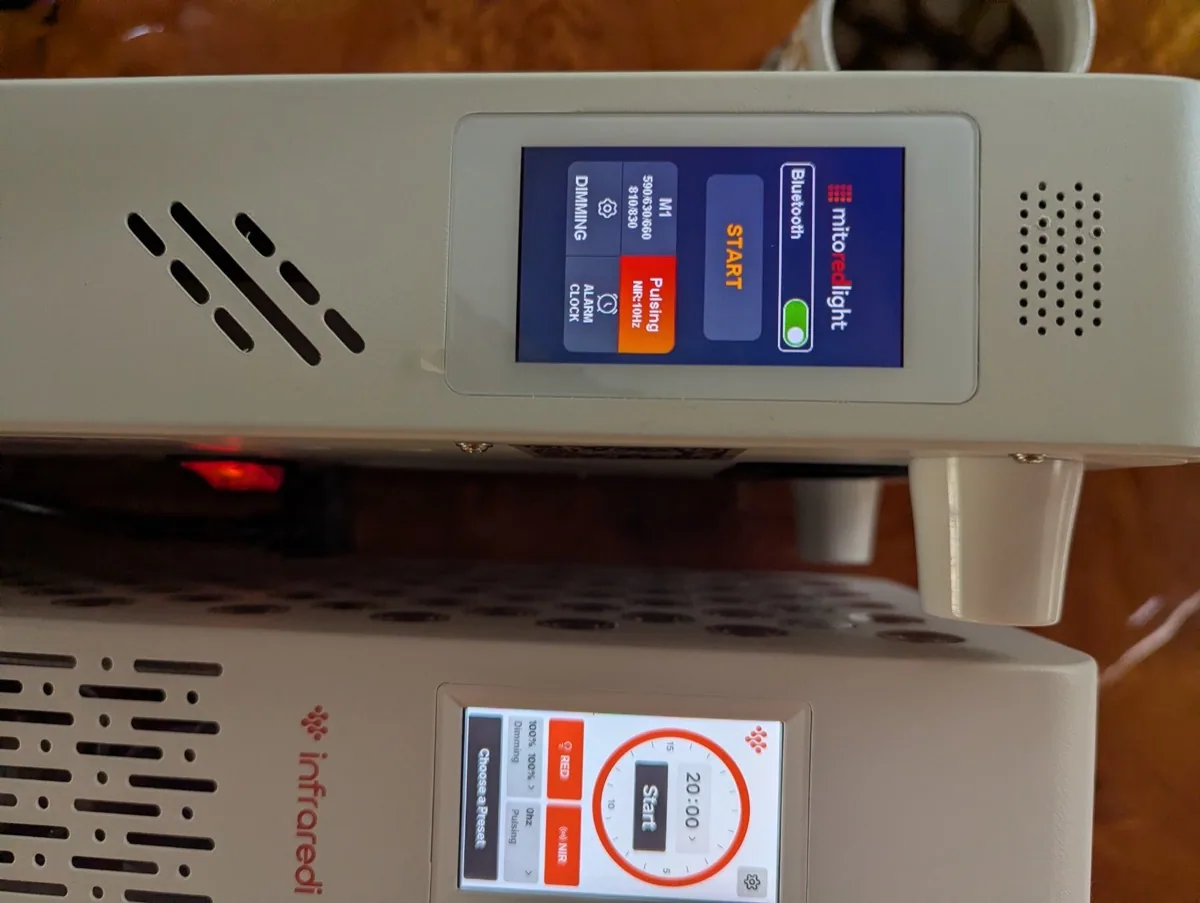
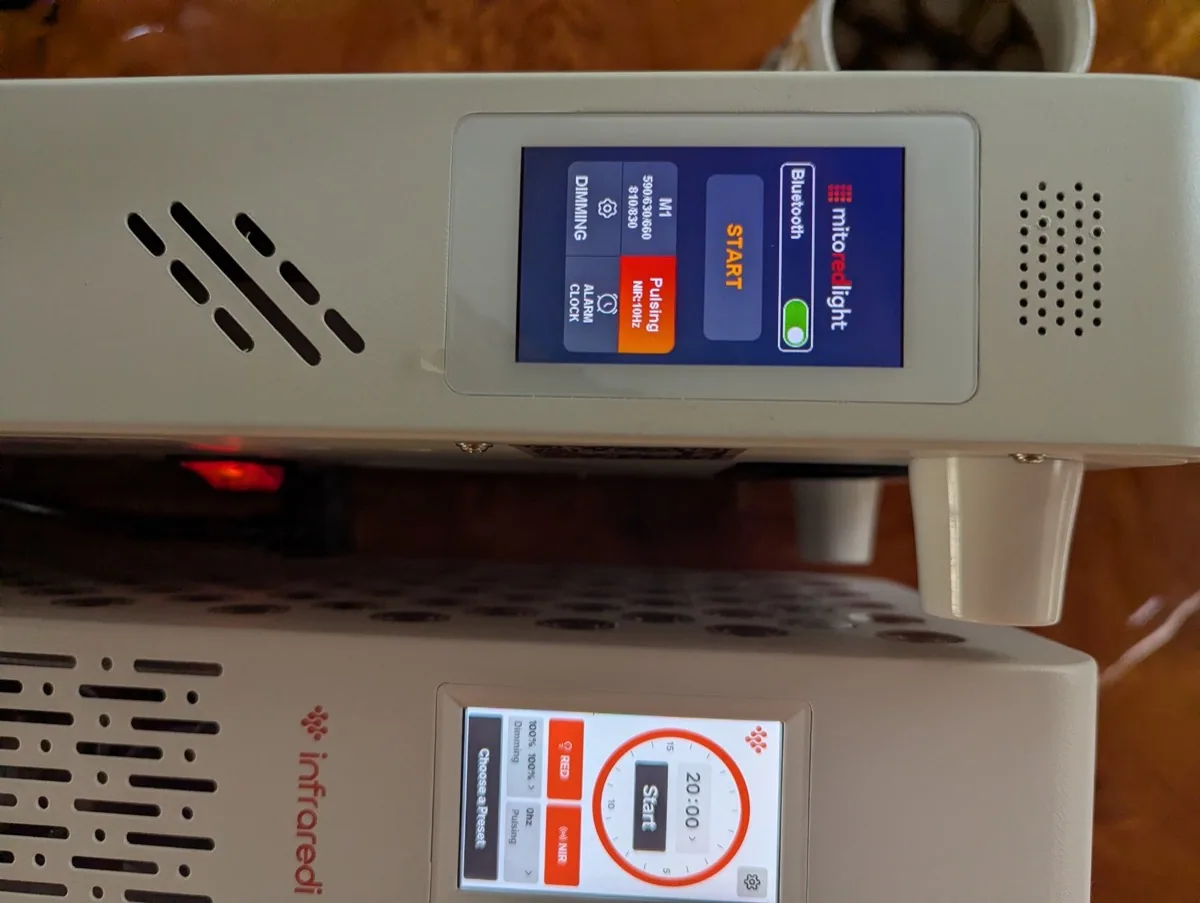
Mito keeps controls simple: basic rocker switches with no pulsing modes or digital timers. Read my full Mito Red Light therapy review for complete lab numbers.
The main limitation is that Mito focuses almost exclusively on panels. If you want a matching red light mask or PEMF mat, you will need to source those from other manufacturers.
Head-to-Head Comparison
| Feature | Kala Pro Panel | Mito MitoPRO Series |
|---|---|---|
| Wavelengths | 660nm + 850nm (2) | 630nm + 660nm + 830nm + 850nm (4) |
| LED Power | 5W clinical-grade | 5W LEDs |
| Pulsing Modes | Yes (292 Hz, 586 Hz, custom Hz) | No (continuous only) |
| Digital Controls | Digital display with timer | Rocker switches |
| Price Range (USD) | ~$300 to $700+ | ~$239 to $999 |
| FDA Registration | Class II (#3016171836) | FDA registered |
| EMF | Zero from 4 to 6 inches | Low EMF |
| Origin | Canadian-designed | US brand |
| Mask Available | Yes (triple-wavelength red, NIR, blue) | No |
| PEMF Mat Available | Yes (Infrared PEMF Mat) | No |
| Guarantee | 30 days | 30 days |
Key Differences in Practice
Wavelength Options: Mito's Multi-Band Array
Mito's four-wavelength configuration provides broader coverage across tissue layers. Photobiomodulation studies confirm that different wavelengths reach different depths.
The 630nm band targets surface dermal cells for collagen support, while 850nm reaches deeper into muscle fascia and joint capsules (de Freitas & Hamblin, IEEE J Sel Top Quantum Electron, 2016; PMCID: PMC5215870).
Kala relies on 660nm and 850nm, the two most researched wavelengths in the literature. While 660nm delivers reliable skin and superficial muscle benefits, Mito provides slightly broader optical coverage per dollar.
Pulse Recovery+ Modes: Kala's Neurological Benefit
Kala's pulsed frequency modes are rare at this price point and provide a clear clinical advantage. The 292 Hz pulse setting helps calm the central nervous system, lower sympathetic tone, and support deeper sleep.
The 586 Hz mode supports seasonal mood balance, and the digital console lets you select specific pulse rates for customized protocols. Mito only offers continuous light delivery, which works well for tissue healing but lacks targeted frequency modulation.
Product Ecosystem: Kala for Integrated Recovery
If you only want a standalone panel, Mito offers strong value. But if you plan to combine panels with a red light mask or a PEMF mat, Kala offers a unified product line.
"In my athletic therapy practice, I use the Kala Pro Panel daily for post-treatment recovery. The Pulse Recovery+ mode at 292 Hz is something I have not seen on other panels in this price range, including Mito. For an athlete managing chronic soreness and poor sleep simultaneously, having pulsed frequency delivery on a daily recovery panel is very useful. Mito gives you more wavelengths on paper, but Kala provides more functional tools in practice." Daryl Stubbs, CAT(C), Holistic Nutritionist
Which Panel Fits Your Needs?
Choose Kala if:
- You want pulsed frequency modes (292 Hz and 586 Hz) for sleep, nervous system relaxation, or pain management.
- You want a digital interface with a built-in session timer.
- You plan to add a matching red light mask or PEMF mat later.
- You prefer a Canadian brand with Health Canada licensing and FDA Class II status.
Choose Mito if:
- You want four wavelengths (630nm, 660nm, 830nm, and 850nm) in a single panel.
- You only need a simple, high-output panel without extra accessories.
- You prefer simple physical switches over digital screens.
My Clinical Recommendation
When comparing purely on wavelength variety per dollar, Mito holds a solid edge with its four-band array. If your main goal is maximum spectral coverage in a standalone panel, Mito is a dependable choice.
However, if you want an integrated recovery setup with pulsed frequency settings, Kala is the stronger long-term option. The Kala Pro Panel earned a place in my clinic because its Pulse Recovery+ modes add neurological recovery capabilities that continuous-only panels cannot match.
"Mito makes a dependable panel, but Kala builds a more complete recovery system. When patients ask which to pick and they already plan to add a mask or PEMF mat later, I tell them to start with Kala. If they just want a simple four-wavelength panel at a fair price, Mito fits the bill." Daryl Stubbs, CAT(C), Holistic Nutritionist
Related Clinical Resources
- Recommended Guide: Read my full, hands-on review of the best red light therapy panels for deeper clinical insights.
- Related Review: Check out my comparative analysis on Kala vs Omnilux.