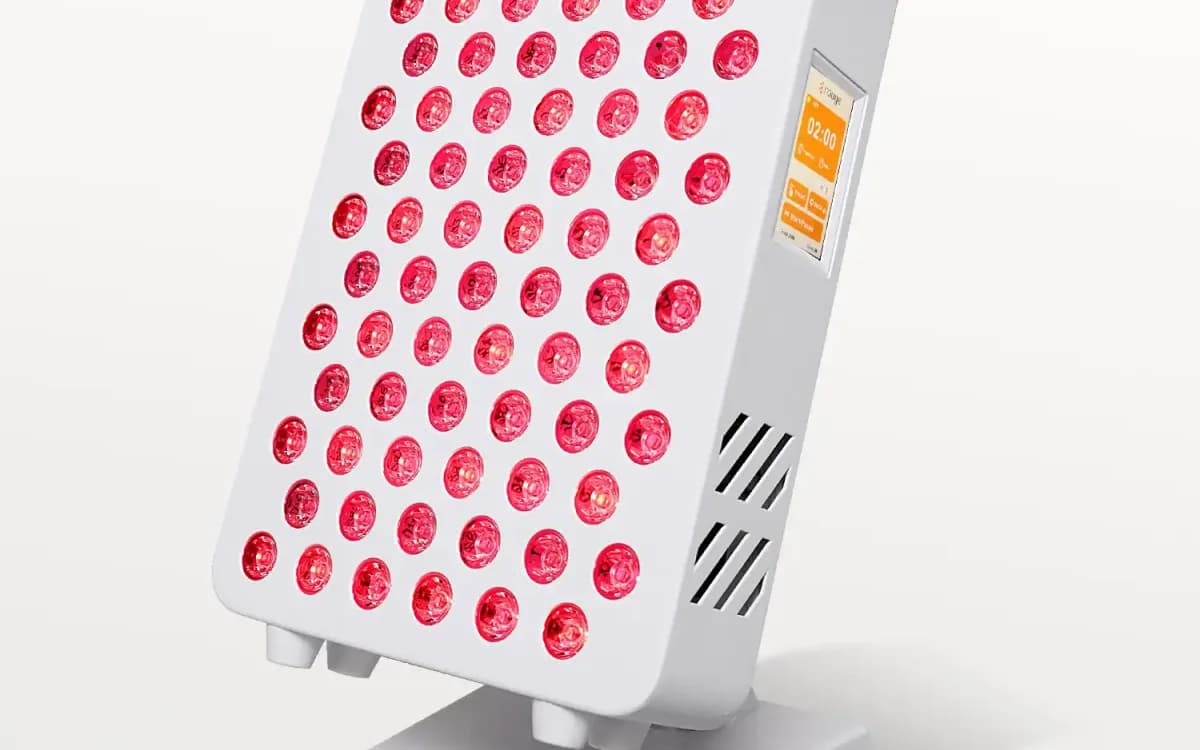
In my clinical practice, patients constantly ask for targeted photobiomodulation devices they can use at home. This Rouge Tabletop G4 review breaks down why I recommend this panel for localized rehabilitation and skin health.
As a Certified Athletic Therapist and clinical researcher, I evaluate biohacking tools based on hands-on results. The Tabletop G4 packs Rouge's 8-wavelength technology into a compact footprint. It delivers solid irradiance without dominating your living space. I regularly recommend it for patients needing skin rejuvenation or localized pain relief.
Technical Specifications
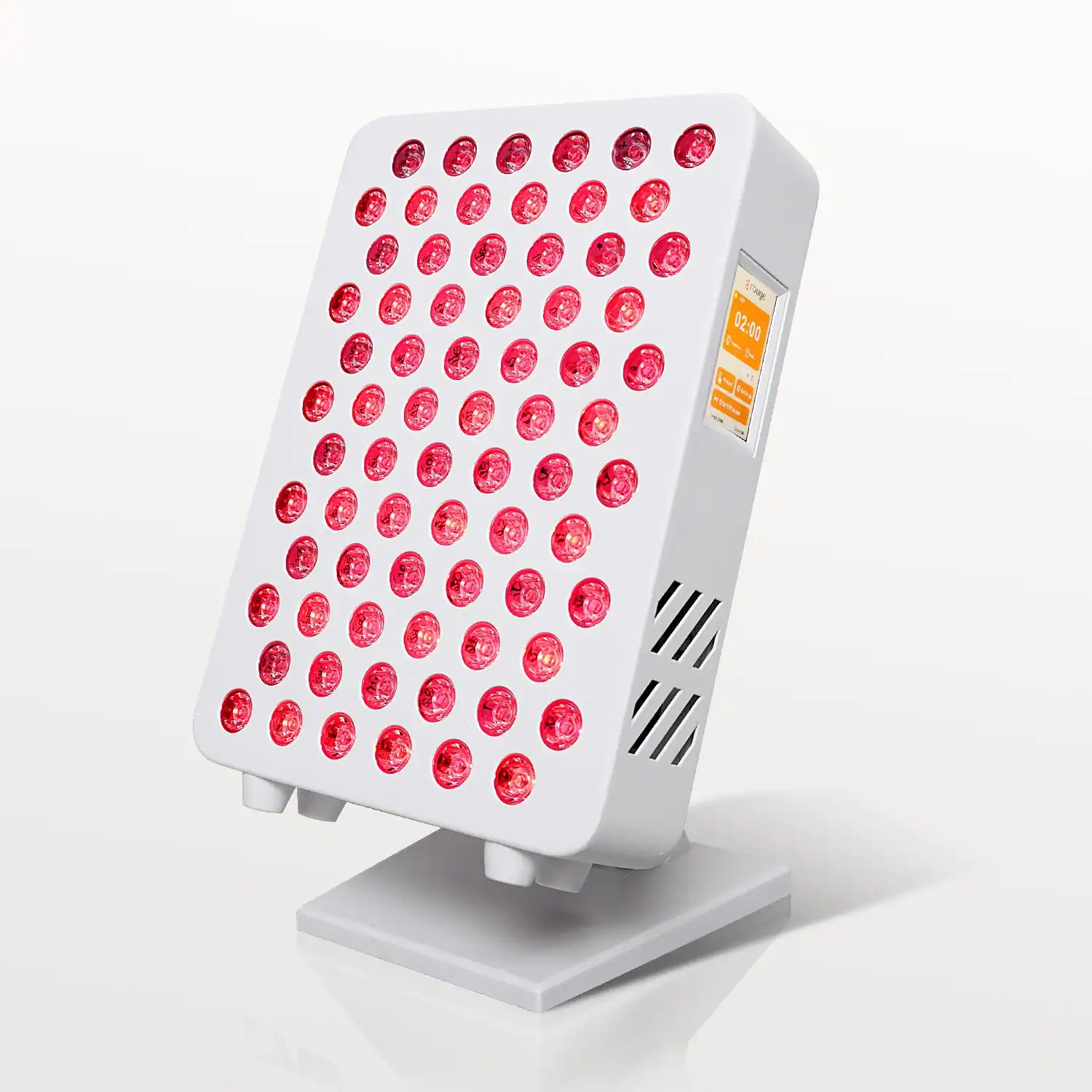
Here is the clinical data and hardware specifications I verified during my evaluation of the Tabletop G4:
| Specification | Rouge Tabletop G4 |
|---|---|
| LED Count | ~144 Multichip LEDs (5W each) |
| Wavelengths | 8: 630, 650, 660, 670nm (Red) + 810, 830, 850, 1060nm (NIR) |
| Irradiance | ~59 mW/cm² at 6 inches |
| Treatment Area | ~12" x 7" (compact targeted) |
| Controls | Touchscreen + Bluetooth App + Remote |
| Independent Dimming | Yes (per wavelength) |
| Pulsing | 1 to 10,000 Hz (per wavelength) |
| Built-in Presets | 7 (Wellness, Skincare, Sleep, Muscle Recovery, Pets, Fat Loss, Joint Pain) |
| EMF | Low EMF with shielding |
| Noise Level | 47.5 dB (whisper-quiet) |
| Dimensions | ~14" x 8" x 2.5" |
| Weight | ~4.5 lbs (lightweight, portable) |
| Price (USD) | ~$645 |
| Warranty | 3 Years |
Unboxing and Setup: First Impressions
The hardware feels solid right out of the box. Setup takes less than five minutes from unboxing to your first treatment session.
What is in the box:
- The Rouge Tabletop G4 panel with an integrated stand and handle
- Standard AC power adapter cord
- Remote control for basic power and timer settings
- Protective goggles for facial treatments
- Hanging kit for optional wall mounting
- Quick start instruction guide
The integrated handle doubles as an adjustable stand. I often have patients set it up on their desk to treat neck stiffness while they work. Bluetooth pairing with the Rouge app connects immediately and stays stable.
Performance: Treatment Distance and Coverage
Clinical outcomes depend on proper dosing and distance. The Tabletop G4 performs reliably within its targeted scope.
Optimal Treatment Distances:
- 6 inches (15 cm): Delivers maximum irradiance (~59 mW/cm²). I use this distance for deep tissue penetration, targeting specific joints, and stimulating mitochondrial activity. Patients report a distinct, soothing warmth.
- 12 inches (30 cm): The beam spreads evenly for full facial coverage. I use this distance for dermatological protocols and superficial inflammation.
- 18+ inches (45+ cm): Intensity drops significantly at this distance, making it best for sensitive skin or light maintenance.
Coverage Area: This is a targeted device engineered for specific anatomical regions:
- Face: At 12 inches, it covers the entire face for skin tone support.
- Knee or Shoulder: It comfortably covers an entire joint capsule for arthritis or tendonitis recovery.
- Lower Back: It targets specific lumbar segments for localized discomfort.
- Full Body: This device is not designed for whole-body treatments; larger panels like the Rouge Pro G4 or Max G4 are built for that purpose.
Treatment Time: For joint work, I prescribe 10 to 15 minute sessions at 6 inches. Facial protocols work best with 15 to 20 minutes at 12 inches. Consistent application is what drives cellular repair.
The 8-Wavelength Spectrum
Most compact panels offer only two to four wavelengths. The Tabletop G4 includes all eight of Rouge's wavelengths, providing broad optical coverage.
Red Light Spectrum (630 to 670 nm): These target the dermal layers.
- 630 nm and 660 nm: Common frequencies for collagen synthesis and skin elasticity.
- 650 nm and 670 nm: Useful for superficial tissue recovery and calming skin inflammation like rosacea.
Near-Infrared Spectrum (810 to 1060 nm): This spectrum reaches deep tissue for musculoskeletal rehab.
- 810 nm and 830 nm: Stimulate cellular energy (ATP) production and tissue repair.
- 850 nm: The standard frequency for joint pain and localized swelling.
- 1060 nm: Provides deep penetration into joint capsules and dense muscle tissue that shorter wavelengths cannot reach.
Having independent control over all eight wavelengths lets you tailor protocols to specific rehab needs.
App and Controls: Customization
The Rouge app turns this panel into a customizable tool rather than just a basic on/off light box.
Rouge App Features:
- Control individual wavelength intensity from 0 to 100%. For facial treatments, you can turn off near-infrared and run red only; for deep joints, increase near-infrared to maximum.
- Per-wavelength pulsing from 1 to 10,000 Hz.
- Built-in treatment timer to track session dosing.
- Save custom presets for recurring routines.
7 Built-in Presets: For quick sessions without manual adjustments, the app and onboard touchscreen include presets for Skincare, Joint Pain, Recovery, Sleep, Wellness, Pets, and Fat Loss.
Tabletop vs. Face Mask: Which is Better?
Patients frequently ask if they should buy an LED face mask or a tabletop panel.
| Feature | Rouge Tabletop G4 | Typical LED Face Mask |
|---|---|---|
| Wavelengths | 8 | 3 to 5 |
| Coverage | Face + body areas | Face only |
| Penetration Depth | 8 distinct wavelengths | Limited |
| Treatment Flexibility | High (joints, body, face) | Low (face only) |
| Independent Control | ✓ Per wavelength | ✗ Usually fixed |
| Pulsing Capability | ✓ Yes (all 8) | ✗ Rarely |
| Price | ~$645 | ~$200 to $400 |
| Value | Excellent | Moderate |
Verdict: Tabletop Wins for Versatility The Tabletop G4 wins this comparison easily. Face masks lock you into fixed shapes and fewer wavelengths. The Tabletop gives you eight wavelengths, deeper penetration, and the versatility to treat a sprained ankle just as effectively as facial wrinkles. For patients managing conditions like rosacea, independent wavelength dimming gives complete control over light output.
Who This Is For: Ideal Use Cases
Based on clinical evaluations, this device fits specific user needs:
- Skincare routines: The red spectrum supports collagen production and skin texture.
- Targeted joint therapy: Deep-penetrating NIR wavelengths provide focused relief for arthritis, tendonitis, and localized stiffness.
- Desk workers: The compact stand makes it simple to treat neck or wrist strain during the workday.
- Secondary panel users: It is an effective secondary unit for spot treatments between full-body sessions.
Who Should Look Elsewhere
This panel may not fit every need:
- Full-body seekers: Systemic treatments require a larger panel like the Rouge Pro G4 or Rouge Max G4.
- Maximum raw power: Larger panels deliver higher total power output for shorter session times over broad areas.
- Strict budget under $400: At $645, this is a premium tool. For basic spot treatments on a tighter budget, look at the Rouge Nano (~$295).
Final Verdict: Rouge Tabletop G4
The Rouge Tabletop G4 delivers the same 8-wavelength technology found in Rouge's larger panels, packaged into a practical portable frame.
I recommend this device to anyone needing targeted rehabilitation or skin support who values wavelength customization and portability.
Rating: 9/10 A solid choice for localized red light therapy.
- Related Review: Check out my comparative analysis on Rouge Vs Block Blue Light.
Reviewed by: Daryl Stubbs, CAT(C), Holistic Nutritionist Athletic Therapist with over 12 years of clinical experience integrating recovery modalities.
Continue Your Research
- → Rouge G4 Series Complete Guide
- → Rouge Reviews Hub
- → Best Red Light Panels
- → Rouge Elite Face Mask Review
- → Red Light for Rosacea
- → Red Light for Joint Pain
- → Getting Started with RLT
Related Clinical Resources
- Category Guide: Read my review of the best red light therapy panels for clinical insights.