PlatinumLED BioMax Review: Quick Verdict
The Verdict: The PlatinumLED BioMax 9th Generation is a heavy-duty clinical workhorse. It delivers high power, solid aluminum construction, and a 7-wavelength spectrum array. However, single-chip beam separation close up (producing a visible grid under 12 inches) and a mandatory 20% restocking fee on returns mean you should be clear on your setup before buying.
PlatinumLED BioMax Review: 7 Wavelengths & Real Power Tested
⚡ Core Video Takeaways & Clinical Highlights
- •7 Wavelength spectrum marketing vs power distribution density in 660nm and 850nm bands.
- •Single-chip LED optics create high peak diode irradiance but produce a polka-dot grid close up.
- •Dual-chip competitors (Mito Red Light) mix colors for uniform washes.
- •20% restocking fee penalty ($300 USD loss on a $1,500 USD panel) plus return freight costs.
- •Quadrant decision tree: High Power / High Risk choice for clinicians and biohackers.
The red light therapy market is full of detailed spec sheets, with every brand claiming the highest output and most advanced design.
The PlatinumLED BioMax series has earned a strong reputation among technical buyers. Its 7-wavelength array, 3-year warranty, and FDA Class II medical listing make it a prominent option in the industry.
I test red light panels regularly in practice, including side-by-side comparisons against panels like the MitoPRO X 750. In this PlatinumLED BioMax review, we examine what using these panels is like day to day.
Technical Overview and Current Platinum LED BioMax Specifications
Here is how the 9th generation BIOMAX lineup compares in USD and estimated CAD pricing at time of writing:
1. What Is the PlatinumLED BioMax Generation Trap?
A common issue when researching platinum led reviews is that many articles online cover older hardware.
Earlier reviews describe the 8th generation BIOMAX, which featured 5 wavelengths (630nm, 660nm, 810nm, 830nm, and 850nm).
Current 9th generation panels run 7 wavelengths by adding 480nm (blue light) and 1060nm (deep near-infrared light).
If you purchase a panel second-hand, verify which generation you are getting by checking the screen and LED layout.
2. Diode Physics: Single-Chip Power vs. Dual-Chip Color Blending
Diode design is the primary hardware difference between PlatinumLED and brands like Mito Red Light, Rojo, and Block Blue Light.
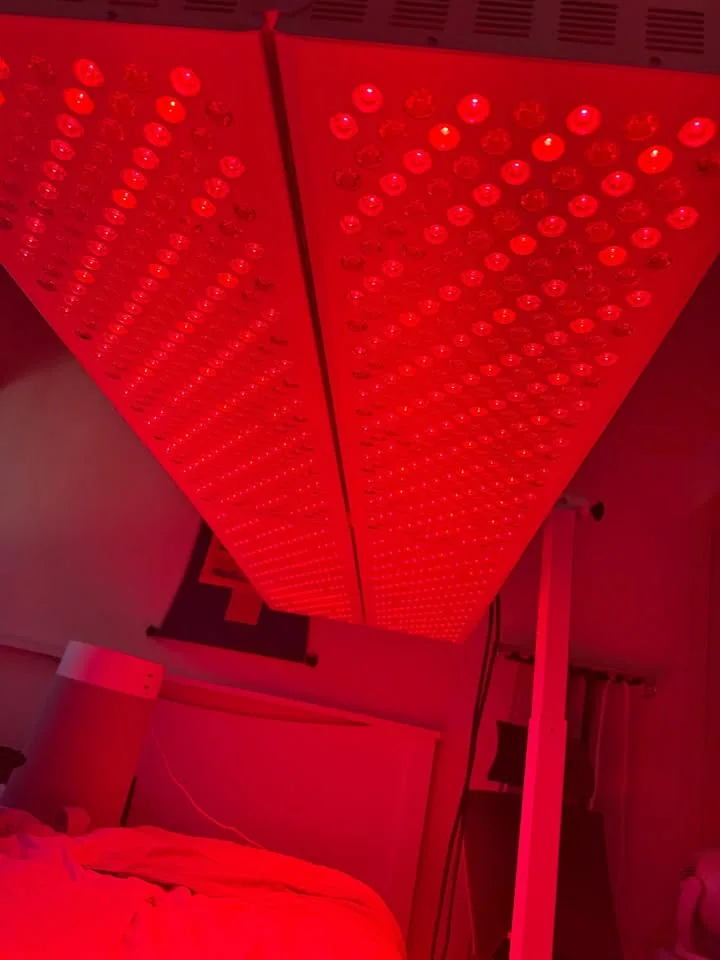
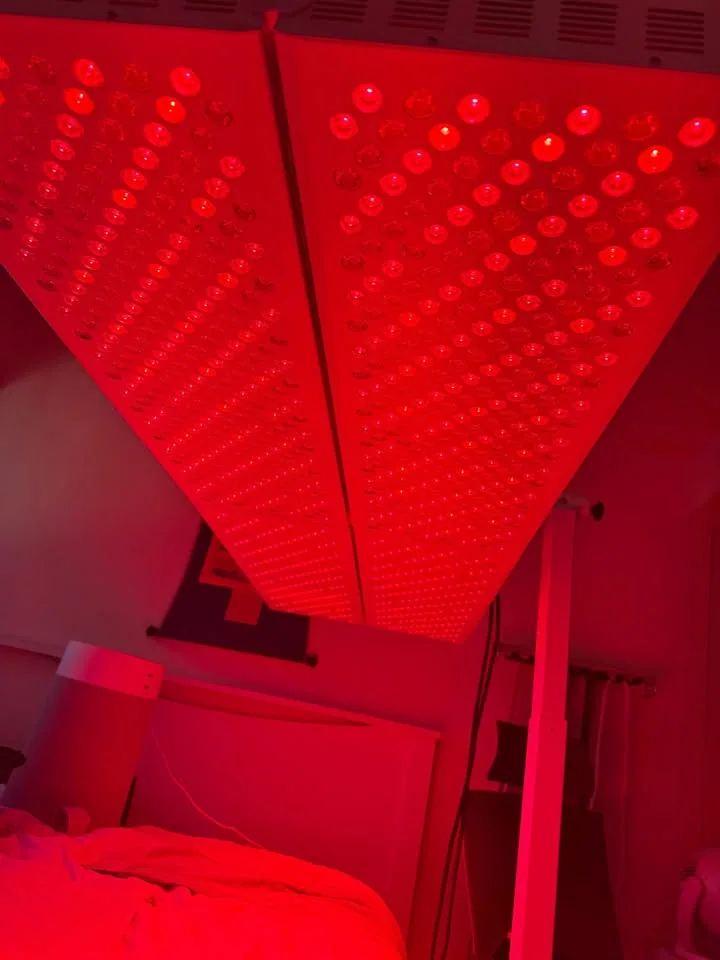
PlatinumLED uses a single-chip LED layout where each lens holds one semiconductor chip emitting one wavelength.
Single-Chip Geometry (PlatinumLED BioMax)
🔴 Visible Grid Pattern on Skin (< 12 in)
Higher raw peak irradiance per diode, but light beams stay separate at close range.
Dual-Chip Geometry (MitoPRO X 750 / Competitors)
✨ Smooth, Uniform Color Wash on Skin
Blends red and NIR light right at the lens exit, ideal for close facial treatments.
Single-chip design allows each diode to push high optical power without overheating the individual die, giving the BIOMAX 900 an irradiance of roughly 185 mW/cm² at 6 inches.
Standing closer than 8 to 12 inches creates a visible pattern across your skin because adjacent diodes do not mix immediately.
Dual-chip panels blend wavelengths inside one diode housing for a smooth wash at close range, with slightly lower single-diode peak power.
For a direct comparison between single-chip and dual-chip systems, read my guide on PlatinumLED vs Mito Red Light.
3. Does the 7-Wavelength Array Provide Real Clinical Power?
PlatinumLED highlights its 7-wavelength array. Having 480nm blue light for skin health and 1060nm for deeper tissue adds variety on paper.
However, diode allocation matters as much as the number of wavelengths.
Most LEDs on the panel face are dedicated to standard 660nm red and 850nm near-infrared. Minor bands like 480nm and 1060nm occupy only a fraction of the surface, so their total energy contribution is modest.
4. What Is the Total Cost of Ownership for a Platinum LED Panel?
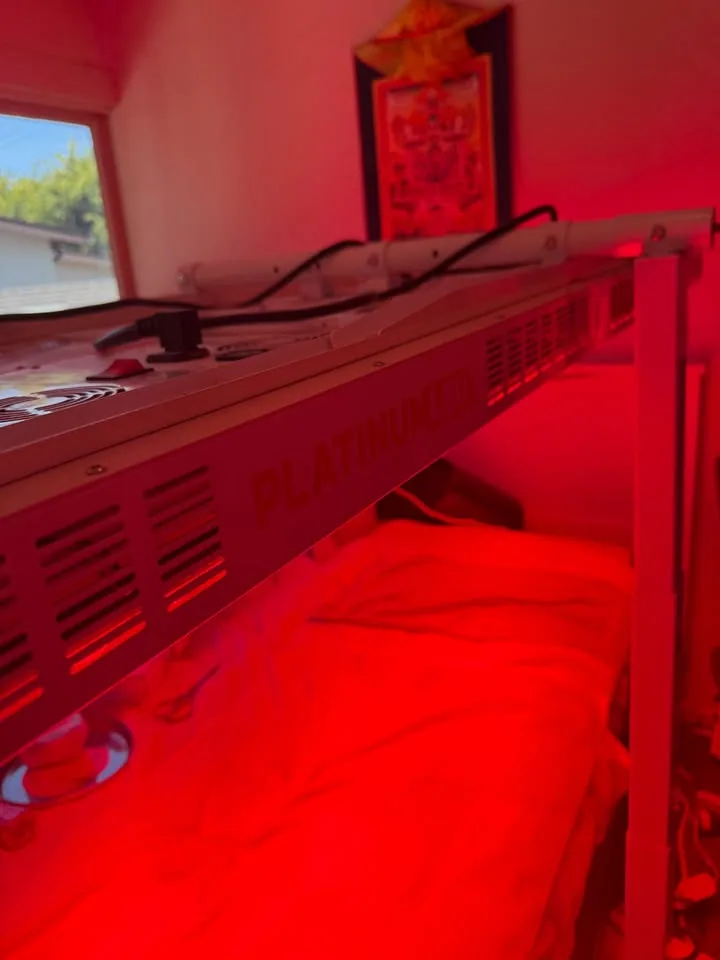
When budgeting for a platinum led therapy lights setup, note that stands are sold separately. While door mounts and wall brackets are included, the 33-pound weight makes a mobile floor stand much more practical for daily use.
| Expense Item | BIOMAX 900 Amount (USD) | Real-World Impact |
|---|---|---|
| Base Panel Cost | $1,299.00 USD | Single panel base investment |
| Mobile Floor Stand | $299.00 USD | Optional but helpful for positioning |
| Estimated Tax & Freight | ~$95.00 USD | Depends on shipping location |
| REAL TOTAL INVESTMENT | ~$1,693.00 USD | approx. ~$2,320 CAD |
PlatinumLED also enforces specific return terms:
- Returns incur a 20% restocking fee ($259.80 USD on a $1,299 USD panel).
- Customers pay return shipping on the heavy 33-pound box.
- The restocking fee also applies to model exchanges.
For more details on customer service terms, check my overview on is PlatinumLED legit.
5. How Loud Is Platinum LED BioMax Fan Noise?
High-power red light panels generate internal driver heat. The BIOMAX series uses rear cooling fans to keep electronics within safe operating temperatures.
In testing, fan noise is audible in quiet rooms, sounding similar to a desktop PC fan under load. It is not excessive, but it is not silent.
6. Which Platinum LED BioMax Model Size Should You Buy?
Choosing a panel size depends on target coverage area and available space:
💡 Decision Tree
Which PlatinumLED BioMax Fits Your Needs?
Targeted Area
BIOMAX 300 / 450
Entry-level compact panels for facial skin treatment or single knee/elbow recovery.
Entry Tier • ~$659 to $799 USD
⚡ Best Home Value
BIOMAX 600
The sweet spot for home biohackers. Same 36-inch height as the 900 but weighs 25 lbs.
Value Winner • $1,049 USD ($1,435 CAD)
⭐ Clinical Pick
BIOMAX 900
Flagship 300-LED high-density power for maximum optical flux and full body treatment.
Flagship Power • $1,299 USD ($1,780 CAD)
- BIOMAX 300 and 450: Best for desktop use, facial skin routines, or localized joint relief.
- BIOMAX 600: Practical choice for torso coverage at
$1,049 USD ($1,435 CAD) at time of writing. Read my guide to the PlatinumLED BioMax series. - BIOMAX 900: Flagship panel for full-body power. Read my dedicated PlatinumLED BioMax 900 review.
PlatinumLED also offers the BIOMAX PRO series. The BIOMAX PRO ULTRA sells for $1,599 USD ($2,190 CAD) at time of writing, adding individual wavelength dimming, 0 to 9,999Hz pulsing, and zero-gap panel joining.
If you are considering the Pro series, see my comparison of BioMax Pro vs BioMax 900.
When you are ready to order, use this direct link to apply current promotional pricing.
Who Is the Platinum LED BioMax For (and Who Should Skip It)?
Who Should Buy It
- Power seekers: Anyone wanting high single-chip irradiance for 10-minute sessions.
- Regular exercisers: Users looking for sturdy aluminum construction designed for long-term daily use.
- FSA / HSA holders: Buyers utilizing pre-tax health accounts on FDA-listed devices.
Who Should Skip It
- Close-range facial users: Anyone wanting smoothly blended light at 3 to 6 inches without visible diode separation.
- Unsure trial buyers: Anyone wanting a risk-free return without a 20% restocking fee.
Final Verdict on the Platinum LED BioMax Review
The PlatinumLED BioMax 9th Generation is a capable clinical workhorse that delivers strong irradiance, durable build quality, and 7 wavelengths.
Keep in mind the single-chip beam pattern up close and the 20% restocking fee on returns. If you want raw power and plan to keep the panel long term, use this official referral link to secure direct manufacturer pricing.
Ready to Order Your BioMax Panel?
Click below to get the best direct pricing on any BioMax model.
Get the Best Deal →