PlatinumLED vs Mito Red Light: Quick Verdict
The Verdict: I own a MitoPRO X 750 and have used PlatinumLED panels extensively. PlatinumLED BioMax is my ⭐ Favourite Clinical Recommendation for raw peak diode power (~185 mW/cm²) and 7-wavelength spectrum reach. Mito Red Light wins on smooth dual-chip color blending at close range and zero return policy financial risk.
PlatinumLED BioMax Review: 7 Wavelengths & Real Power Tested
⚡ Core Video Takeaways & Clinical Highlights
- •7 Wavelength spectrum marketing vs power distribution density in 660nm and 850nm bands.
- •Single-chip LED optics create high peak diode irradiance but produce a polka-dot grid close up.
- •Dual-chip competitors (Mito Red Light) mix colors for uniform washes.
- •20% restocking fee penalty ($300 USD loss on a $1,500 USD panel) plus return freight costs.
- •Quadrant decision tree: High Power / High Risk choice for clinicians and biohackers.
I want to be completely open about affiliate commissions. Mito Red Light pays me a 10% affiliate commission, while PlatinumLED pays 5%. I test gear directly and give you my honest recommendations regardless of payout rates.
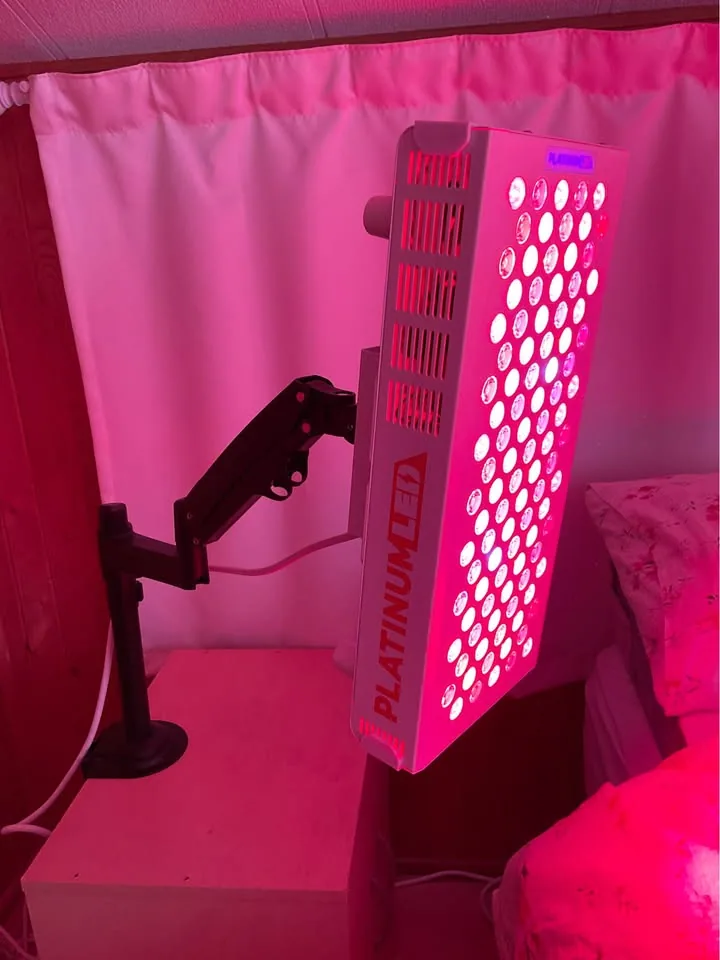
Choosing between PlatinumLED and Mito Red Light comes down to a fundamental choice between raw power and smooth light blending.
I own a MitoPRO X 750 and have used PlatinumLED panels extensively. Standing in front of both units in the same room reveals major physical differences that do not show up on basic spec sheets.
In this hands-on PlatinumLED vs Mito Red Light comparison, we will examine single-chip versus dual-chip diode geometry, fan noise, commission transparency, USD/CAD pricing, and return policy costs.
Head-to-Head Feature Matrix: Platinum LED vs Mito Red Light
Here is how the flagship panels compare in both USD and estimated CAD pricing at time of writing:
1. Diode Geometry: Single-Chip Brute Force vs. Dual-Chip Color Blending
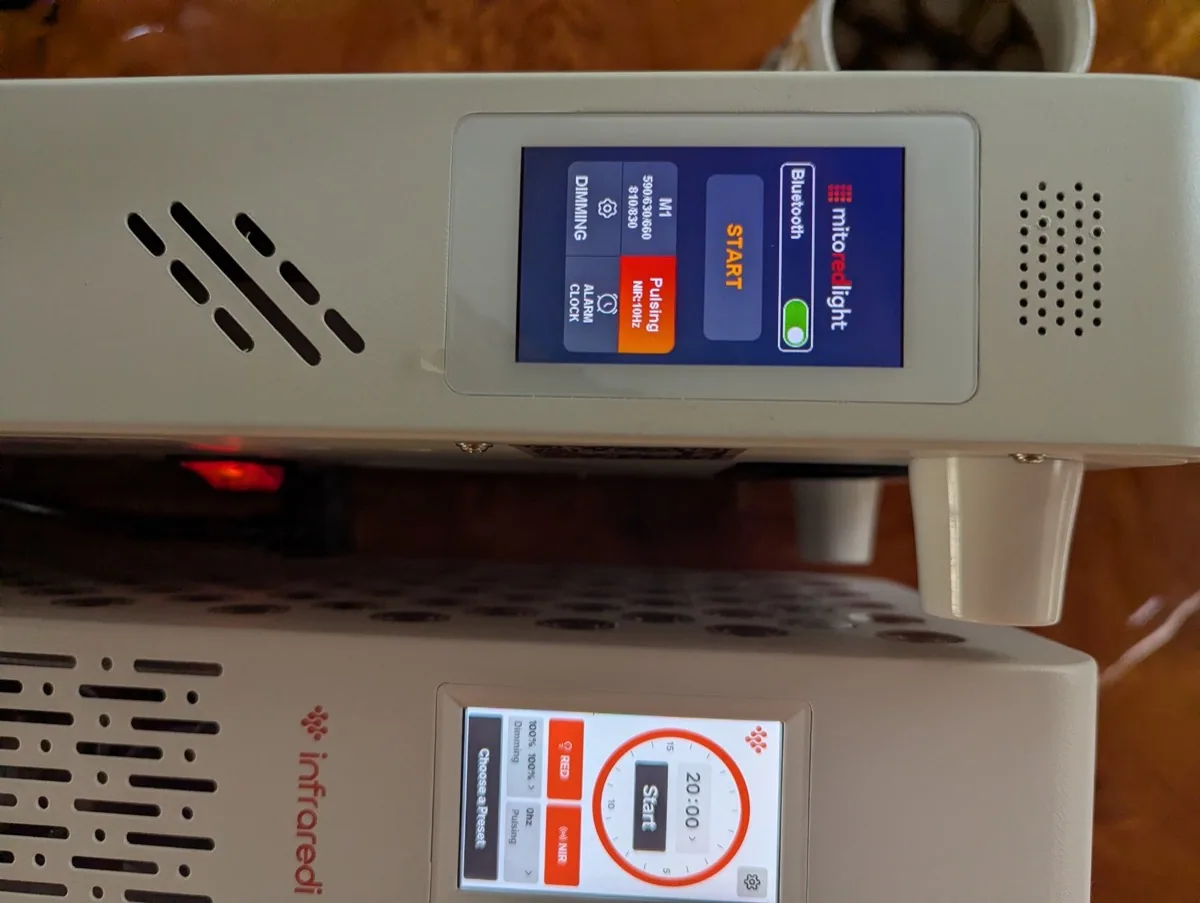
The biggest physical difference between these two brands is diode architecture.
PlatinumLED uses single-chip LEDs. Each diode lens houses a single semiconductor emitting one specific wavelength.
Mito Red Light uses dual-chip LEDs, housing two distinct wavelength chips inside every diode reflector lens.
Single-Chip Geometry (PlatinumLED BioMax)
🔴 Visible Polka-Dot Grid on Skin (< 12 in)
Higher raw peak irradiance per diode, but light beams stay separate at close range.
Dual-Chip Geometry (MitoPRO X 750 / Competitors)
✨ Smooth, Uniform Color Wash on Skin
Blends red and NIR light right at the lens exit, ideal for close facial treatments.
Standing in Front of Both Panels
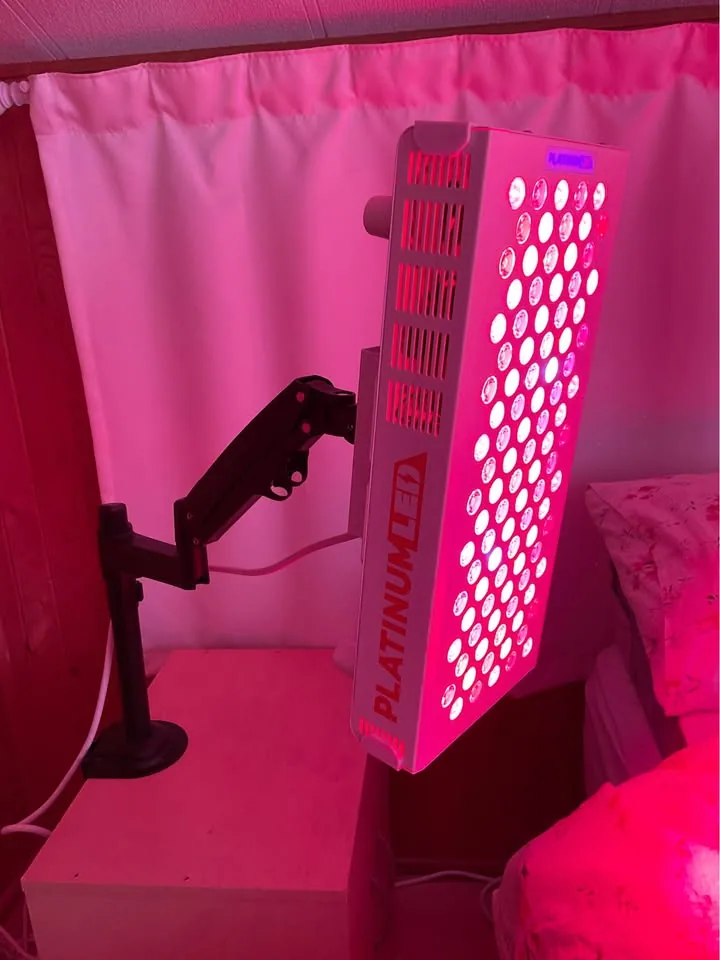
When you stand 6 inches away from the PlatinumLED BIOMAX 900, you can see distinct red, near-infrared, and blue dots projected onto your skin. The light beams run parallel and do not mix immediately.
Single-chip construction lets PlatinumLED push higher raw power per diode, reaching ~185 mW/cm² at 6 inches on the BIOMAX 900.
When you stand 6 inches away from the MitoPRO X 750, the light looks like a smooth, perfectly blended wash of pink and red. The dual-chip lenses mix red and near-infrared wavelengths right as light leaves the panel.
If you are doing close-range facial treatments, Mito's blended light is smoother. If you want maximum raw power for deep tissue recovery, PlatinumLED pushes harder per diode.
2. Return Policy Risk: 20% Restocking Fee vs. Zero Fee
For many buyers, return policy math matters more than spec sheet differences.
If you purchase a ~$1,299 USD /blog/platinumled-biomax-900-review and decide to return it, PlatinumLED charges a mandatory 20% restocking fee. You also pay return freight shipping.
- Base Panel: $1,299.00 USD
- 20% Restocking Fee: -$259.80 USD
- Est. Return Freight: -$75.00 USD
- TOTAL LOST: -$334.80 USD (~$460 CAD)
- Base Panel: $1,199.00 USD
- Restocking Fee (0%): $0.00 USD
- Return Freight: Included options
- TOTAL LOST: $0.00 USD Loss
If you are a first-time buyer worried about light sensitivity or room space, Mito Red Light presents far lower financial risk.
If you decide to buy PlatinumLED, use this direct link at checkout to get direct manufacturer pricing.
3. How Do Joovv vs Platinum LED and Hooga vs PlatinumLED Compare?
Buyers comparing these brands often wonder where Joovv and Hooga fit:
Joovv offers a polished design and modular mounting tracks. However, Joovv panels cost significantly more while delivering only 2 wavelengths (660nm and 850nm).
Hooga serves as an affordable option for entry-level buyers, though its panels lack the heavy-duty aluminum housing and high diode density found on PlatinumLED or Mito.
4. Decision Matrix: Which Brand Fits Your Setup Best?
⚖️ Brand Chooser Matrix
Which Red Light Brand Fits Your Priorities?
⭐ Clinical Pick
PlatinumLED BioMax 900
Single-chip diode brute force pushing ~185 mW/cm² optical flux across 7 wavelengths.
Power Winner • $1,299 USD ($1,780 CAD)
Blended Light
Mito Red Light MitoPRO
Dual-chip optical lens blending for smooth facial washes and zero restocking fee returns.
Ergonomic Winner • ~$1,199 USD
Modular Track
Joovv Solo 3.0
Sleek mounting ecosystem, though significantly higher price for 2 basic wavelengths.
Ecosystem Option • Higher Price
Buy PlatinumLED If:
- You want maximum raw single-chip diode output (~185 mW/cm² at 6").
- You want a broad 7-wavelength spectrum including 480nm blue and 1060nm deep NIR.
- You are a biohacker or athlete building a permanent high-power recovery setup via this direct link.
Buy Mito Red Light If:
- You want uniform, dual-chip color blending for close-range facial treatments.
- You want a risk-free trial without a 20% restocking fee penalty.
- You want a lower initial price point with included accessories.
Final Recommendation on Platinum LED vs Mito Red Light
Both brands make top-tier red light panels.
If you want brute-force power and deep-tissue penetration, PlatinumLED BIOMAX is the technical winner. Use this referral URL to get direct pricing.
If you want blended light ergonomics and zero return risk, Mito Red Light is the decision for most first-time home users.
Ready to Buy PlatinumLED BioMax?
Click below to get the best direct manufacturer deal on PlatinumLED panels.
Get the Best Deal →